The History Between Us: Why Caribbean Women Should Travel to Africa and Haiti
What if Africa and Haiti are not two destinations, but two chapters of the same story?
That is the idea behind The Legacy Tour, a three-continent journey created by Belle Vue Tours that takes travelers from Africa to Europe to Haiti, tracing the people, cultures, systems and struggles that connected these places across the Atlantic.

“We want people to understand that these are not separate stories,” says Guerline T. Emmanuel, co-founder of Belle Vue Tours. “They are connected chapters of our history.”
The journey begins in West Africa in July–August 2027, traveling through Senegal, Ghana, Benin and Togo, before continuing to Europe in March–April 2028 and Haiti in December 2028–January 2029. Travelers can experience the individual journeys or follow the larger three-continent story.
What makes the concept intriguing is that the experience is not built around simply visiting famous landmarks. The African journey brings together history, culture, spirituality, local experiences and contemporary life, while exploring the civilizations and cultural systems that existed long before the transatlantic slave trade. The European chapter examines the forces and institutions that shaped the Atlantic world. Haiti brings the journey to a place where the struggle against slavery and colonial rule produced a revolution that changed the world.
For Caribbean women, it offers an opportunity to look at our own region from farther away, and perhaps, to see it more clearly.
Africa: Beyond the Story of Slavery
For many people of African descent, Africa is introduced through a story of departure: millions of people captured, transported across the Atlantic and forced into slavery. The Legacy Tour begins by widening that story.
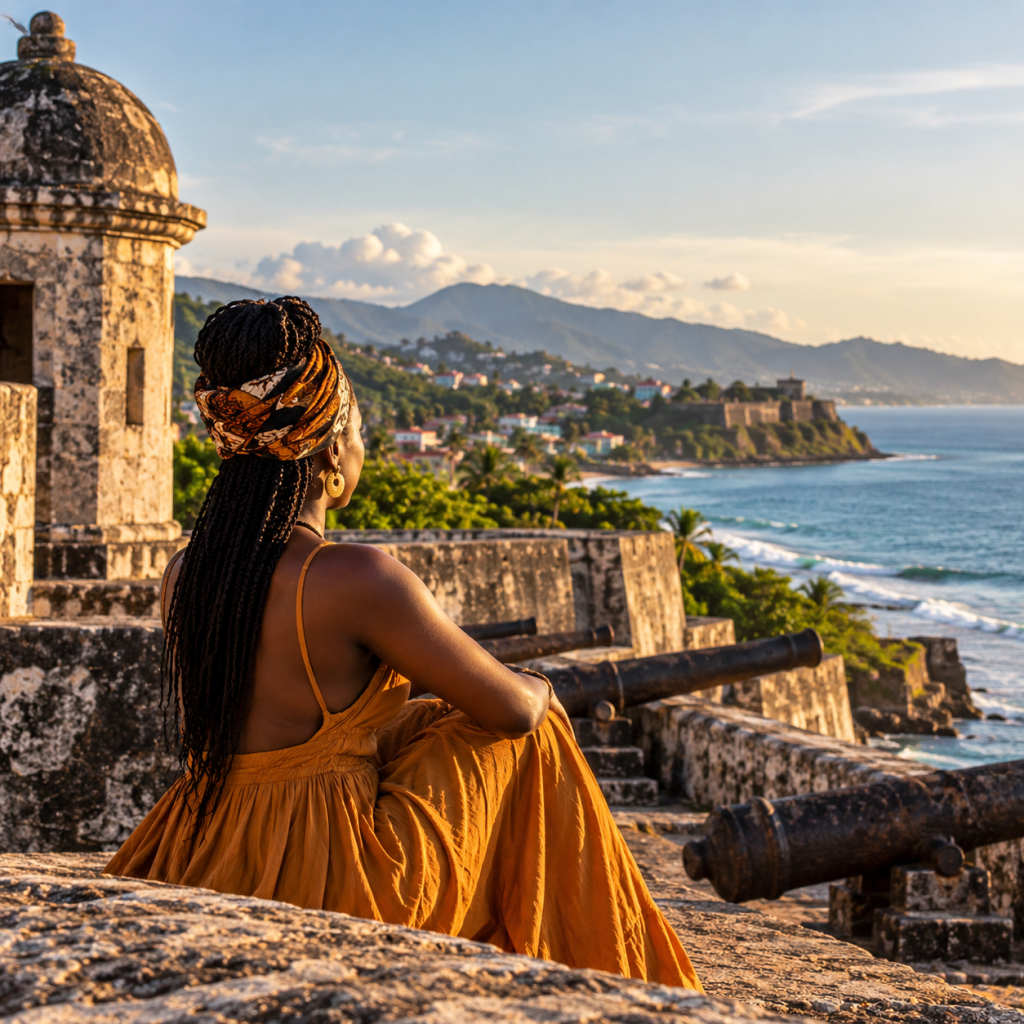
Travelers move through Senegal, Ghana, Benin and Togo, encountering historical sites, cultural traditions, spiritual practices and contemporary communities while learning about the civilizations and societies that existed before the Atlantic slave trade. The experience also engages with the difficult history of enslavement and the places connected to it, creating a fuller picture of West Africa and its relationship to the wider diaspora.
That matters for Caribbean travelers because Africa is sometimes presented as a single ancestral homeland rather than the vast and diverse continent it is.
“Before our family fabric was disrupted, we were not simply ‘Black people,’” Emmanuel says. “We came from different nations, empires, kingdoms, cultures, and traditions.”
The journey makes that diversity part of the experience.
Instead of simply asking, Where did my ancestors come from?, a traveler can begin asking what those societies were like, how they lived, what they believed and what they created.
For many descendants of enslaved people, the first question may never have a definitive answer. Centuries of forced migration and disrupted records have made precise genealogical tracing impossible for many families.
But there is still plenty to discover.
UNESCO’s Routes of Enslaved Peoples program, launched in 1994 at the initiative of Benin and Haiti, connects sites across Africa, Europe, the Caribbean and the Americas and examines the history of the slave trade alongside resistance, cultural survival and the contributions of people of African descent.
The Legacy Tour’s African experience follows a similar instinct: to encounter the history of the diaspora without reducing Africa to the tragedy that took millions of its people away.
What Came With Us
One of the most powerful things about traveling through West Africa is the possibility of recognizing pieces of Caribbean life in a much larger story.
The people transported across the Atlantic did not leave everything behind. They carried agricultural knowledge, food traditions, spiritual practices, music, craftsmanship, languages and ways of organizing family and community.
Those traditions changed as they encountered Indigenous, European and Asian cultures throughout the Americas. But they survived.
“Even when they arrived with very little physically, they did not come empty-headed,” Emmanuel says. “They brought knowledge, traditions, beliefs, skills, creativity, tenacity, and a wealth of culture and spirit.”
You can see evidence of that cultural movement throughout the Caribbean.
In Cuba, for example, the Tumba Francesa tradition emerged among Haitian migrants and combines African-derived musical and dance traditions with European forms. UNESCO recognizes it as Intangible Cultural Heritage.
For a Caribbean woman, encountering West African traditions in their own cultural and historical settings can make familiar aspects of Caribbean life feel newly legible. Food, music, spirituality and language can stop looking like disconnected cultural artifacts and start looking like evidence of journeys that happened generations ago.

Europe: The Part of the Story We Cannot Skip
The decision to place Europe between Africa and Haiti is one of the most interesting aspects of The Legacy Tour.
If Africa represents the beginning of the journey, Europe represents the systems that connected the continents.
The European chapter examines the colonial powers, institutions and structures that shaped the Atlantic world and profited from the movement of African people and resources. Rather than treating Europe simply as another destination on a luxury itinerary, the tour places its history within the larger story being traced.
Belle Vue Tours’ own language is blunt: Africa is “The Source,” Europe is “The Taker,” and Haiti is “The Return.”
The framing invites travelers to think about what happened between the place where people were taken and the societies they eventually helped create.
That middle chapter matters because Caribbean history cannot be understood by looking only toward Africa. Europe shaped the political and economic conditions under which the Caribbean was built, while the Caribbean itself became a place where African, European, Indigenous and Asian influences collided and produced something new.
Haiti: More Than a Revolution
By the time the journey reaches Haiti, travelers have already spent time tracing the forces that shaped the Atlantic world.
Now they arrive at one of its most extraordinary outcomes.
The uprising that began in Saint-Domingue in 1791 culminated in Haitian independence on January 1, 1804. The Haitian Revolution was the first successful antislavery and anticolonial revolution in the Western Hemisphere and resulted in the creation of an independent Black nation.
But the Haiti experience offered by Belle Vue Tours is not simply a history lesson.
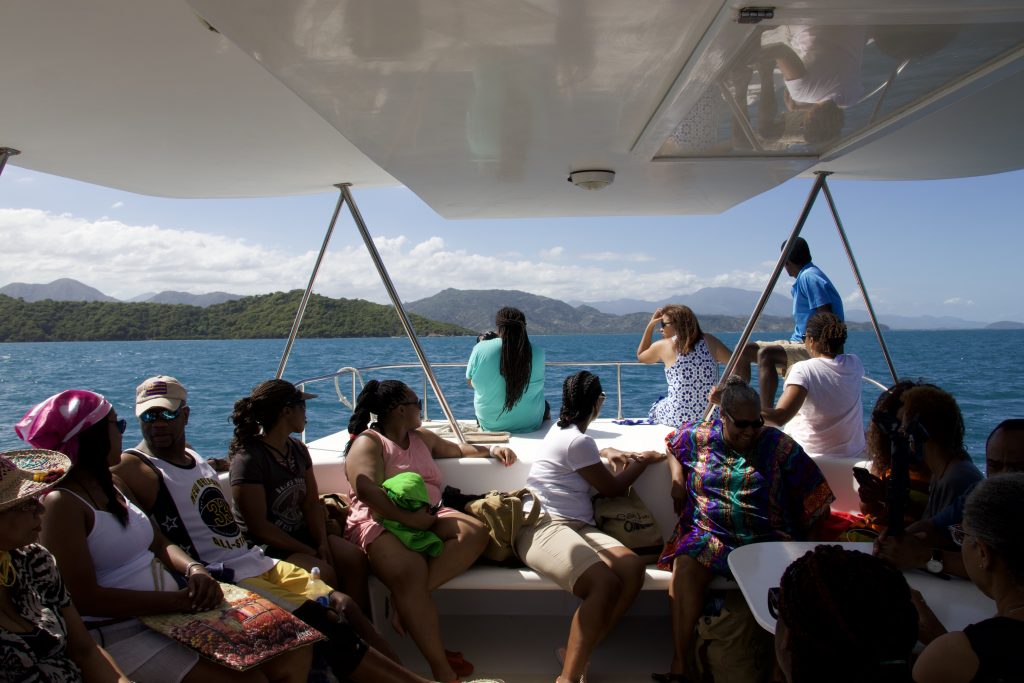
The company’s Haiti tours have long been designed to take visitors beyond the conventional resort experience, incorporating the country’s history, culture, landscapes, food and music. The Legacy Tour builds on that approach with an emphasis on revolutionary history, heritage and remembrance.
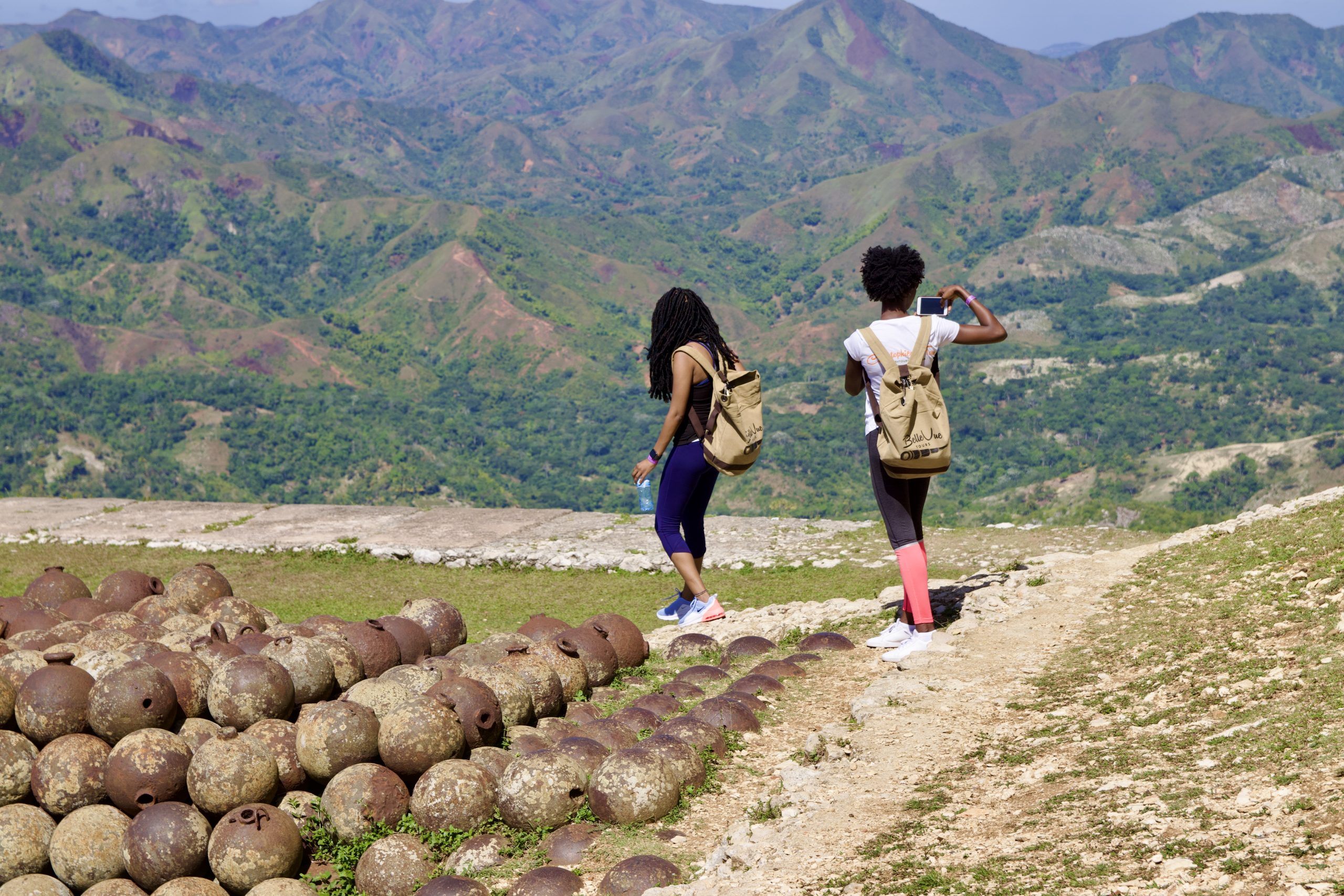
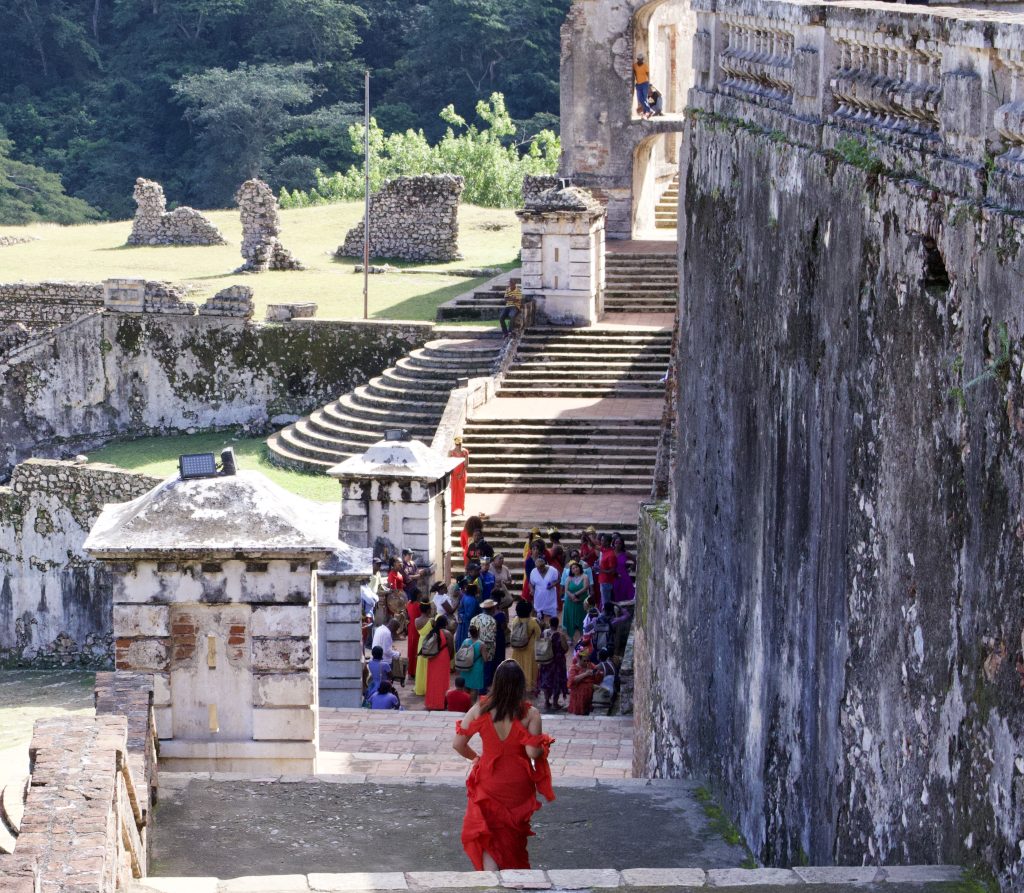
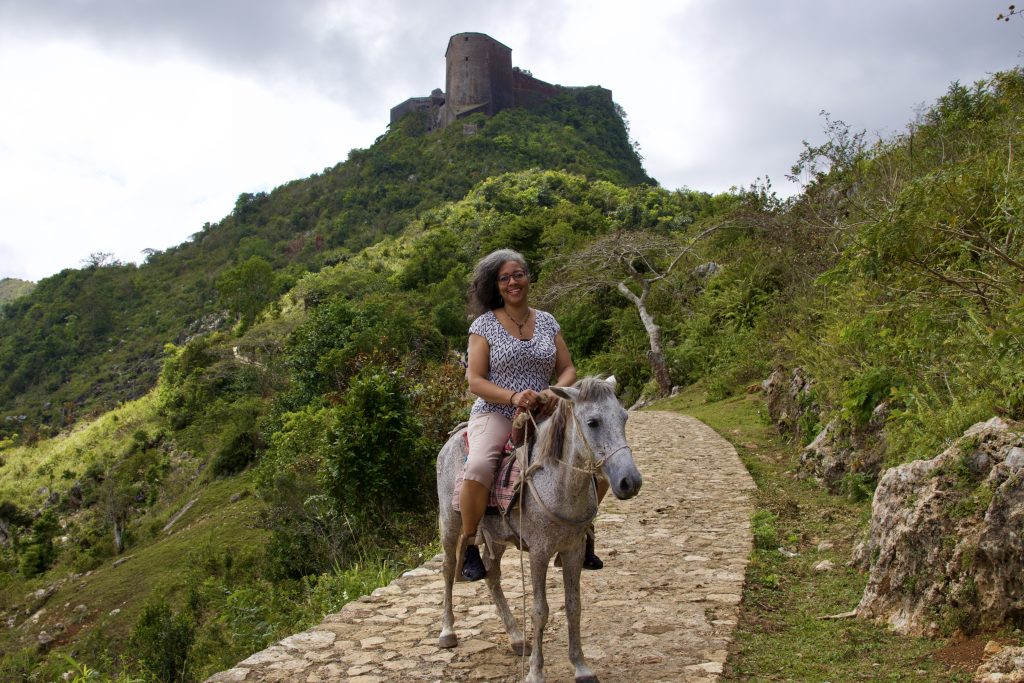
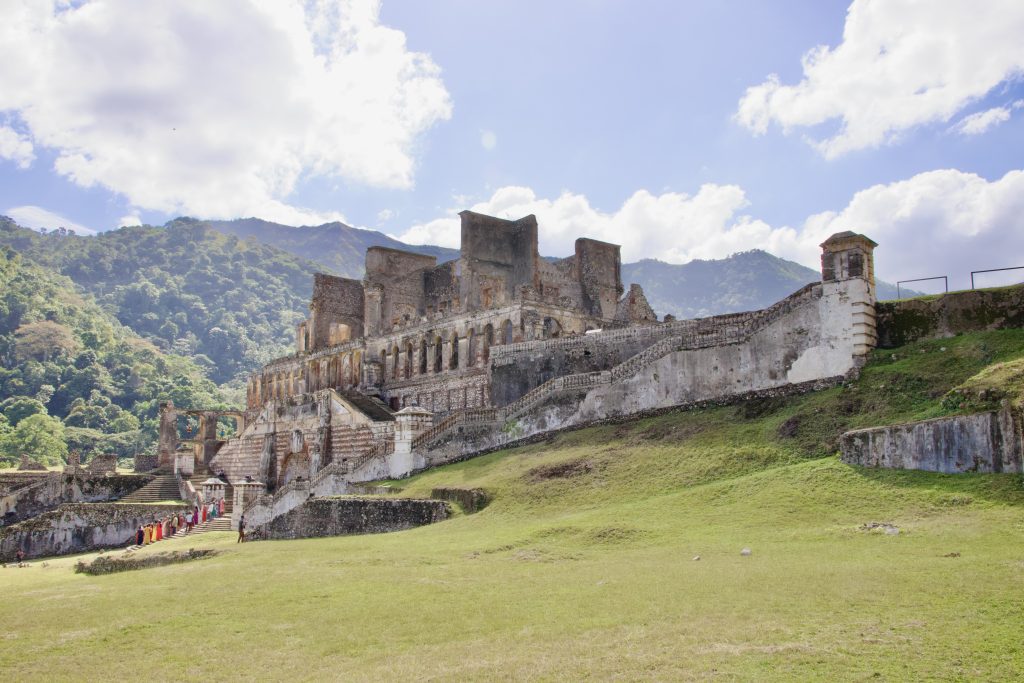
Travelers encounter places such as Citadelle Henry and Palais Sans-Souci, monumental reminders of the country that emerged after independence. The National History Park—Citadelle, Sans-Souci, Ramiers has been a UNESCO World Heritage site since 1982.
Other elements of the Haiti experience bring travelers closer to contemporary Haitian life, including local culture, food, music and the communities that continue to give the country its character.
That combination is important. Haiti is not a museum of its revolution. It is a living country whose history is still visible in its architecture, traditions and cultural expressions.
“I believe physically experiencing these places creates a connection to history that you simply cannot get from reading about it,” Emmanuel says.
She has seen that connection among travelers herself. Emmanuel recalls watching African Americans, Belizeans, Jamaicans and particularly Grenadians encounter Sans-Souci and recognize an unexpected connection to their own histories, including the story of Henry Christophe, who had been transported to Saint-Domingue from Grenada.
“In that moment, you could feel that our stories are intertwined,” she says.
Seeing Haiti Beyond the Headlines
There is another dimension to the Haiti journey: the opportunity to encounter a country that is often reduced to its problems.
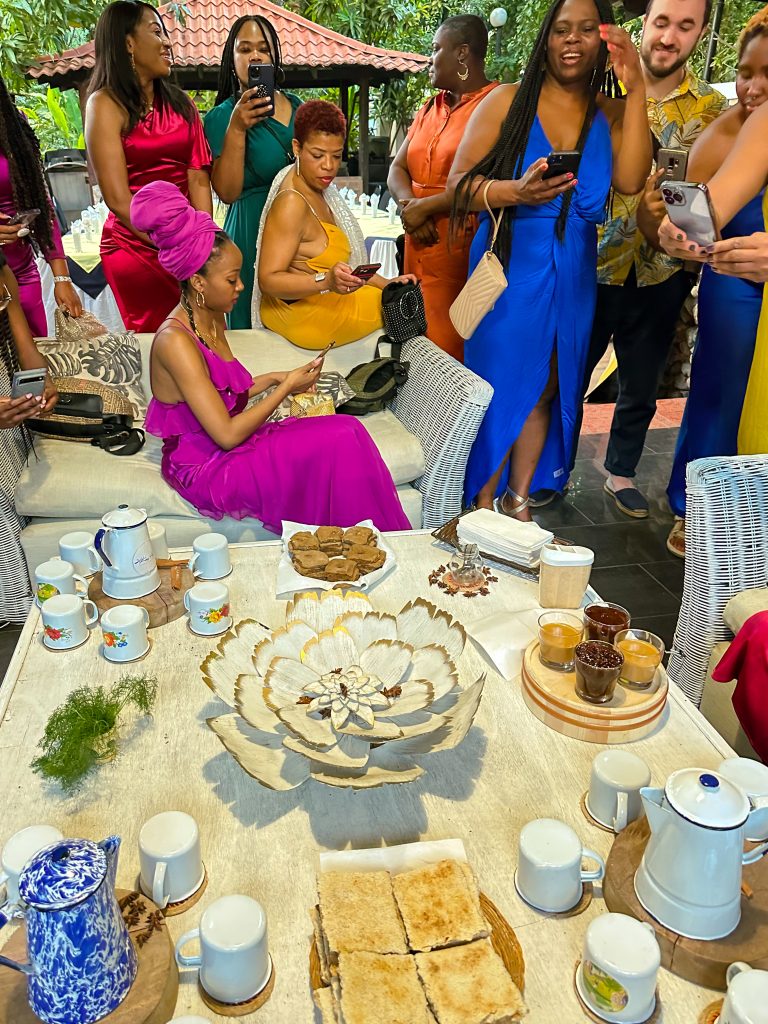
Haiti’s contemporary challenges are serious, but they are not the entirety of the country. Its artistic traditions, music, food, entrepreneurship, spirituality and cultural life exist alongside its difficult political and economic circumstances.
For Emmanuel, part of traveling to Haiti is learning to question the narratives outsiders create about the country.
“Before accepting any narrative, you have to understand who created it, who controls it, and who benefits from it,” she says.
That does not mean overlooking Haiti’s realities or romanticizing the country. It means allowing travelers to encounter a place in more than one dimension, and to understand both the history that made Haiti significant and the society that exists there today.
Why This Matters to Caribbean Women
The Legacy Tour is not exclusively for Caribbean travelers, but its premise has particular relevance to women from the region.
A Caribbean woman can travel to Africa and encounter civilizations that existed long before the history of slavery that so often dominates discussions of African ancestry. She can travel to Haiti and encounter a revolutionary history that belongs to the Caribbean as a whole, even though it unfolded on one island.
“A Caribbean woman can discover how deeply her identity is connected to Haiti and the wider Caribbean,” Emmanuel says. “She can walk through places where people fought for freedom, experience the culture, and understand that this history is not distant, it is part of who we are.”
For Emmanuel, the significance is rooted in “our shared history, culture, and identity.”
That does not mean every Caribbean woman will have the same relationship to Africa or Haiti. Caribbean identity is too diverse for that. A Jamaican, Grenadian, Barbadian, Trinidadian, Guyanese or Haitian woman may carry very different family histories.
But those histories exist within a region that has always been connected by migration, trade, culture, colonialism and resistance.
Travel can make some of those relationships visible.
The Experience Doesn’t End When You Come Home
Perhaps the most interesting part of a journey like this happens after the plane lands.
You may return to your own Caribbean kitchen and think differently about a food tradition you’ve eaten all your life. You may hear a rhythm you have known forever and suddenly wonder about its deeper history. You may ask an older relative questions you never thought to ask before.
That is the possibility of travel as cultural discovery.
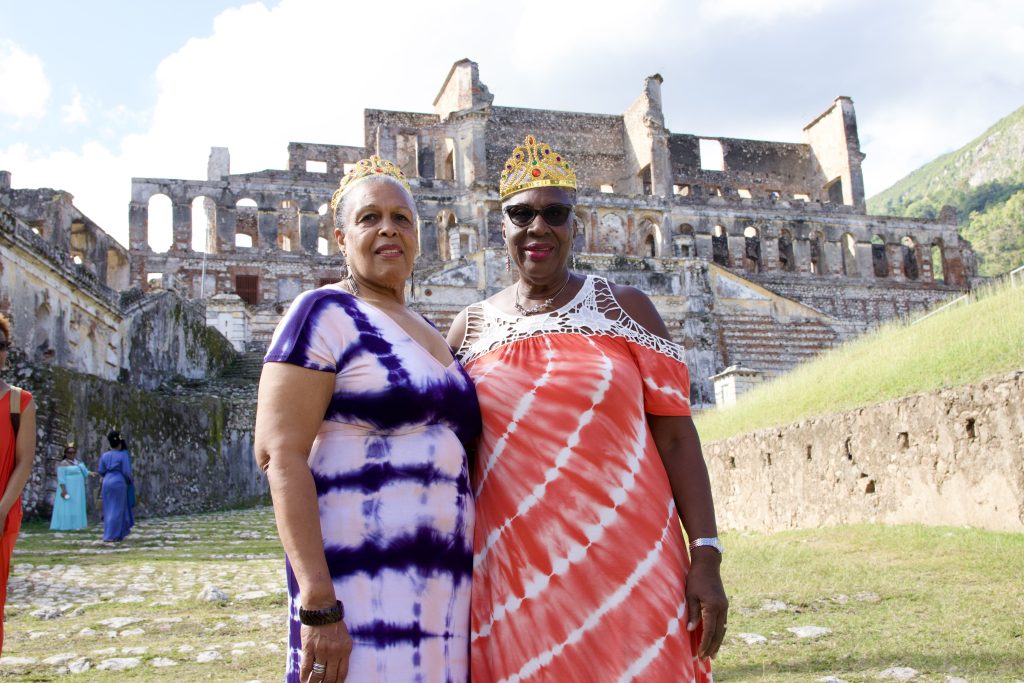
The Legacy Tour creates an unusual opportunity to move through the history rather than simply reading about it: to encounter West African societies and traditions, confront the European systems that shaped the Atlantic world, and then arrive in Haiti, where enslaved people transformed resistance into independence.
The places remain distinct. The histories remain distinct.
But the connections between them become harder to ignore.
“If more Caribbean people intentionally traveled to Haiti, Africa, and throughout our region to explore these connections,” Emmanuel says, “I believe we could begin to see ourselves more as a collective, recognizing the threads of what our ancestors created, the dots that connect us, and the many things we share.”
Perhaps that is the real invitation behind The Legacy Tour. Not to travel in search of a single origin story, but to encounter the many places, people and histories that have helped shape the one we call Caribbean.
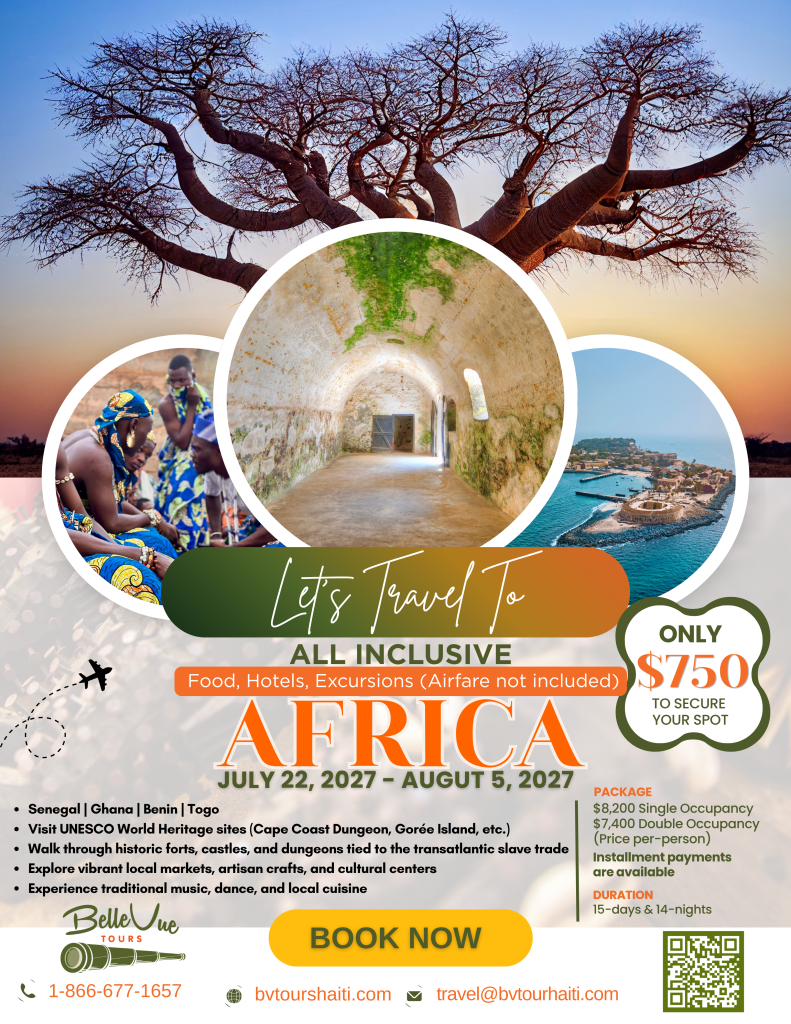
For more information on The Legacy Tour