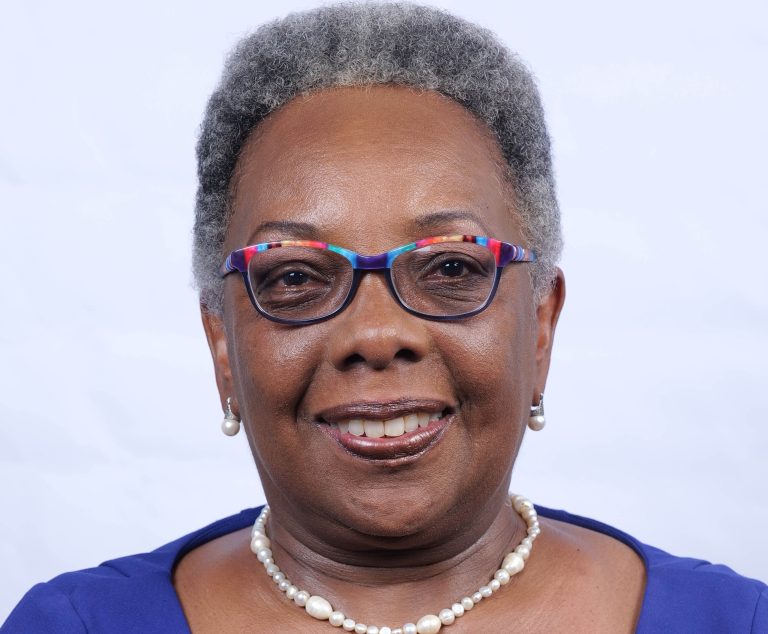
Dr. Trisha Bailey: Turning Healthcare Entrepreneurship into Generational Impact
Dr. Trisha Bailey is a Jamaican-born entrepreneur, philanthropist, and bestselling author whose work sits at the intersection of healthcare access, education, and strategic giving. From founding a healthcare supply and pharmacy network to making historic gifts to her alma mater, Bailey has used business as a platform for community investment and systems change—building enterprises that employ hundreds while directing capital toward student support, medical access, and civic life.
It’s this mix of scale, intentional philanthropy, and personal story that has earned Dr. Bailey recognition as a Women Impact Awards honoree—an award that will be presented during Future Forward 2026, the Caribbean Philanthropic Alliance’s flagship forum taking place February 9–12, 2026, in Kingston, Jamaica. Future Forward gathers funders, movement leaders, and implementers to rethink how capital and partnerships can fuel equitable, climate-resilient development across the Caribbean and its diaspora; the Women Impact Awards spotlight women whose leadership shifts power and delivers measurable results.
From pharmacy counters to institutional giving
Bailey built her core business, Bailey’s Pharmacy & Medical Equipment & Supplies, into a multi-company portfolio that today employs hundreds and generates substantial revenue in the healthcare sector—an achievement she pairs with sustained philanthropy and visible civic investment. Her business profile and company materials describe an enterprise focused on medical supplies for elderly and disabled patients, staffing health facilities, and expanding community access to medical equipment and care.
Her philanthropy has had high-impact, public results. In 2022 Dr. Bailey made the lead gift supporting a major renovation and expansion of the University of Connecticut’s student-athlete facilities—the largest athletic donation in UConn history—demonstrating a willingness to invest at institutional scale in the people and places that shaped her. That gift and others underscore a pattern: she gives strategically, often toward education, student support, and community programs that multiply opportunity.

Public profiles and reporting have also positioned Bailey among Jamaica-born business leaders with substantial personal wealth—a narrative she has used to amplify investments in the Caribbean and in diaspora communities in the United States. Her memoir, Unbroken, traces the arc from childhood trauma to entrepreneurial success and situates her philanthropy within a story of resilience and accountability.
A pragmatic philanthropy rooted in systems change
What sets Dr. Bailey’s approach apart is its systems orientation: she treats philanthropy like an extension of enterprise strategy rather than a series of one-off donations. Her giving has supported athletic facilities, scholarships, community organizations, and health initiatives—efforts designed to build infrastructure and expand opportunity over the long term. This is consistent with the Women Impact Awards’ emphasis on leadership that changes outcomes and reorganizes power, not merely makes headlines.
Her profile on her personal site and company pages makes clear that she views business as a vehicle for dignity—particularly for elderly and disabled populations who benefit from improved access to medical supplies and home care equipment—and that workforce development within her companies is a core priority. Those operational commitments—hiring, training, and providing stable jobs—are part of how she translates philanthropy into everyday impact.
The architecture of influence: visibility, accountability, and giving back
Dr. Bailey’s public giving—especially the landmark support to University of Connecticut athletics—signals a broader lesson for regionally minded philanthropists: large gifts can both acknowledge personal debt to institutions and catalyze programmatic investment that benefits many. At the same time, Bailey’s investments in medical infrastructure and care echo a practical truth about philanthropy in health: durable impact requires pairing capital with operational expertise and community partnerships.
Her recognition on lists and profiles noting her wealth and influence has been accompanied by an intentional public presence—speaking engagements, media profiles, and a memoir that narrates how trauma and survival shaped her commitments. That transparency—of origins, strategy, and focus—helps demystify large philanthropic gifts and models accountability for other high-net-worth contributors from Caribbean and diaspora communities.
What this means for the Women Impact Awards and Future Forward
As a 2026 Women Impact Awards honoree, Dr. Trisha Bailey joins a cohort of leaders whose private success is being channeled into public good. Her inclusion at Future Forward 2026 invites a conversation about how philanthropic capital—when combined with enterprise, lived experience, and institutional partnerships—can tackle pressing regional needs: health access for vulnerable populations, education and youth opportunity, and local economic resilience. For a region still underfunded relative to need, examples like Bailey’s offer practical models for aligning business returns with social returns.