Why Indo-Caribbean Stories Matter
For many people who identify as Indo-Caribbean, identity is less a fixed category than a living archive. It is carried in recipes prepared from memory, in chutney playing alongside soca at family gatherings, in Bollywood films watched in Caribbean homes, and in traditions that have survived oceans, migration and generations of change.
It is an identity shaped by movement, tracing its roots to ancestors who crossed the seas under indentureship after the abolition of slavery and evolved over time into something distinctly Caribbean, yet deeply connected to multiple histories at once.
Yet despite more than 180 years of Indo-Caribbean history, those lives have remained surprisingly rare in mainstream film and television.
Filmmakers such as Ian Harnarine, whose acclaimed short film Doubles with Slight Pepper offered an intimate portrait of Indo-Caribbean family life, alongside directors like Richie Mehta and a growing generation of independent writers and filmmakers, have expanded the canon in important ways. But compared with the scale and diversity of the global Indo-Caribbean diaspora, that body of work remains comparatively small and has rarely received the visibility or institutional support afforded to other narratives.
The result is more than a gap in representation. It raises larger questions about cultural memory, belonging and whose everyday experiences are considered worthy of documentation.
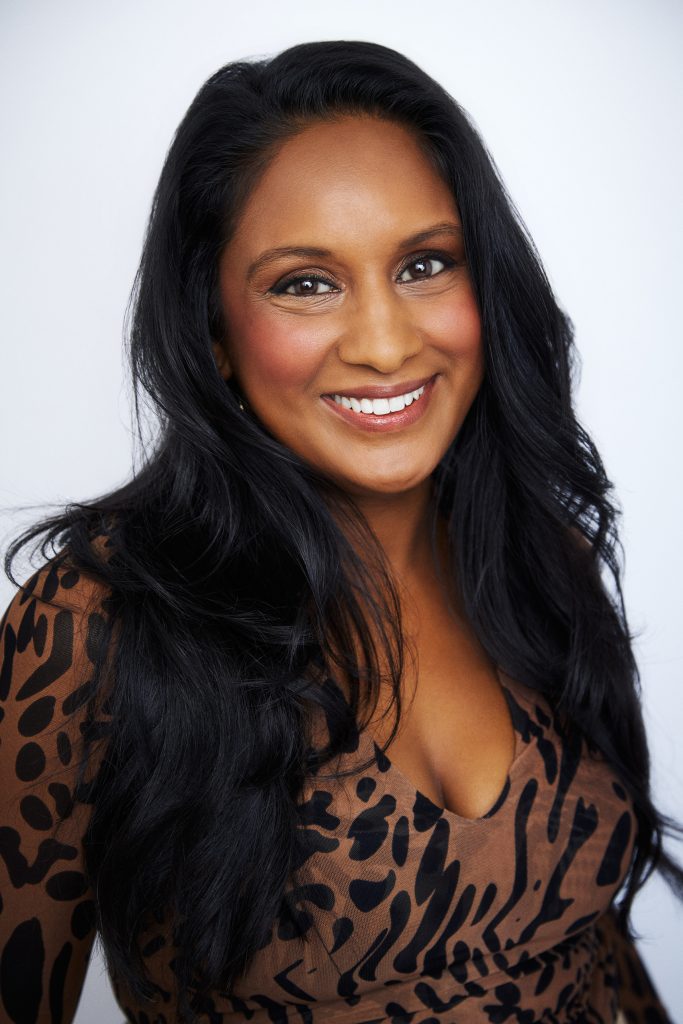
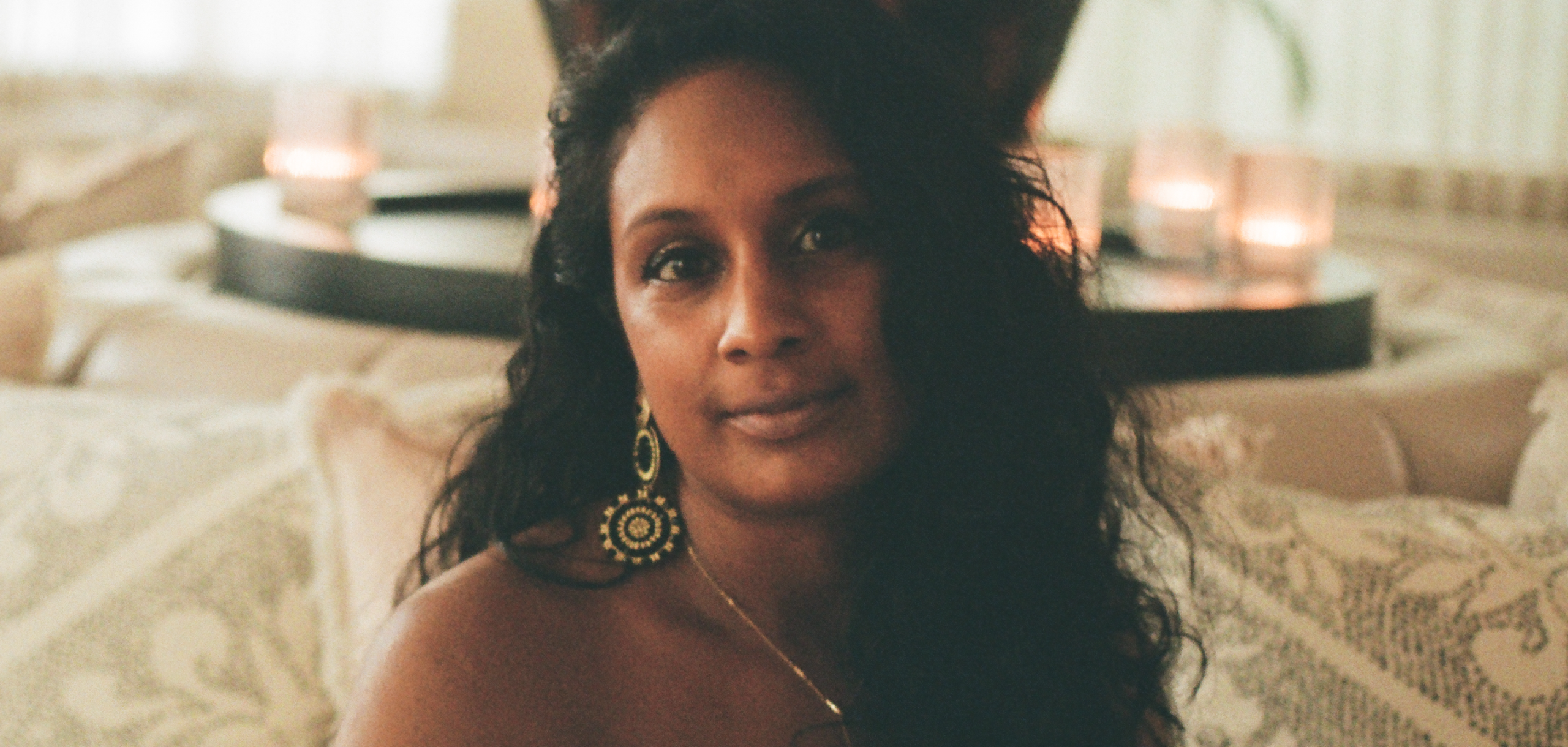
For filmmaker and writer Keisha Bissram, those questions have become the foundation of her work. Through projects such as Black Cake, she is not simply creating stories about Indo-Caribbean life. She is helping preserve the emotional histories of a community that has often existed in plain sight, yet just beyond the frame.
The Space Between Identities
“I think I felt the absence long before I had language for it,” Bissram reflects. “Growing up, I rarely saw Indo-Caribbean families onscreen in any meaningful way.”
Diaspora communities are often discussed through broad categories that fail to capture their internal diversity. The label “South Asian” encompasses dozens of nationalities, languages and histories. “Caribbean,” meanwhile, contains multiple racial, cultural and linguistic traditions shaped by Indigenous peoples, enslavement, indentureship and migration.
Indo-Caribbean identity exists at the intersection of those histories.
Between 1838 and the early twentieth century, more than half a million Indians were transported to the Caribbean as indentured laborers after the abolition of slavery, establishing communities that would profoundly shape the cultural landscapes of Trinidad and Tobago, Guyana, Suriname and Jamaica. Over generations, those communities forged identities that were neither wholly Indian nor wholly reflective of any single Caribbean experience, but uniquely their own.
For Bissram, growing up in Staten Island meant inhabiting that layered identity every day.
“I think Indo-Caribbean people often exist in a very complicated middle space culturally,” she says.
“At home, my family watched Bollywood films, listened to chutney and soca, ate roti and curry, celebrated Caribbean traditions and carried pieces of multiple cultures at once. But at the time, it often felt like neither space fully recognized us.”
READ OUR FEATURE ON KEISHA BISSRAM AND HER FILM – BLACK CAKE
That experience is not simply about confusion over labels. It reflects the emotional labour required to constantly translate oneself.
“There were prejudices, assumptions and moments where it felt like we existed on the outside of both conversations,” she says. “Sometimes there’s pressure to simplify yourself to make other people comfortable or to fit into categories that were never really built for you.”
The burden of constantly explaining one’s identity can become so familiar that it feels ordinary. Yet over time, it shapes confidence, belonging and even imagination. If the world struggles to understand where you fit, it becomes easier to question whether your story belongs at all.
The Emotional Cost of Invisibility
Representation is often discussed as a matter of optics around who appears on screen and who does not. But Bissram argues that invisibility carries consequences that extend far beyond entertainment.
“When people rarely see themselves represented, it can affect confidence, ambition, self-expression and even the belief that your story deserves space in the first place,” she says. “A lot of people learn to stay small, stay quiet and simply get by.”
Communities preserve themselves not only through archives or official histories but through rituals, humor, recipes, language and everyday family traditions. Stories become vessels for emotional memory, documenting the ordinary moments that rarely find their way into textbooks but shape the lives of generations.
“I believe stories preserve emotional truth in ways history books often can’t,” Bissram says. “Culture isn’t only preserved through facts or timelines. It’s preserved through memory, humor, recipes, rituals, language, music, arguments, family dynamics and the tiny details people carry with them across generations.”
History may tell us when people arrived, where they settled and what laws governed their lives. Storytelling tells us how they loved, grieved, celebrated and endured.
Without those stories, communities risk losing more than visibility. They risk losing access to the emotional archive that defines who they are.
Black Cake as Cultural Archive
That philosophy sits at the heart of Black Cake, where a familiar holiday dessert becomes an archive of family history.
“I didn’t grow up thinking one day I’d make a film about black cake,” Bissram says. “It was simply part of Christmas. It was always there.”
Only later did she begin to understand what the ritual represented.
“It wasn’t until I got older that I realized those traditions weren’t permanent. Someone has to carry them forward.”
Every year, fruit is soaked months in advance. Recipes are recreated from memory rather than measurements. Techniques are passed quietly from one generation to the next. The labour itself becomes invisible because it is repeated so faithfully.
The making of black cake is therefore not simply a culinary tradition. It is an act of cultural preservation.
In many Caribbean households, these rituals have long been sustained by women whose work has often gone unnoticed precisely because it was expected. They preserved family histories through repetition, ensuring that culture survived not through institutions but through kitchens, conversations and celebrations.
By centering black cake as both symbol and story, Bissram asks viewers to consider how much of cultural identity survives because ordinary people choose to keep practicing it.
Centering Women Who Have Always Carried Culture
If stories preserve culture, they also reveal who has historically carried the responsibility of preserving it. Within many Indo-Caribbean families, that responsibility has long rested with women, whose quiet labor has sustained traditions, family histories and cultural continuity across generations.
If traditions survive through repetition, Bissram believes women have often borne that responsibility without recognition.
“So many Indo-Caribbean women have spent generations carrying enormous emotional, cultural and familial responsibility without recognition,” she says.
Her description is striking not because it romanticizes sacrifice, but because it insists on complexity.
“I want Indo-Caribbean women to be seen as fully human: funny, flawed, sensual, ambitious, complicated, grieving, resilient, vulnerable. Not just caretakers or background figures or non-existent.”
Her observation points to a broader imbalance within cultural storytelling. Women who have long been entrusted with preserving family history and cultural continuity have too often been denied rich interiority on screen, appearing primarily as symbols of sacrifice or tradition rather than as individuals navigating desire, grief, ambition and contradiction.
Representation is not achieved simply by increasing the number of Indo-Caribbean faces on screen. Meaningful representation requires allowing those characters to exist beyond stereotype, to occupy genres beyond cultural trauma, and to experience the full range of human contradiction.
Asked what success would look like in the next decade, Bissram’s vision is refreshingly ordinary.
“I’d love to see Indo-Caribbean actors leading romantic comedies, thrillers, dramas, action films, prestige television, comedy series… everything.”
What Bissram describes is not a desire for exceptional treatment but for ordinary inclusion—the ability for Indo-Caribbean actors and characters to occupy every genre and emotional register without their identity becoming the defining feature of the narrative.
It is the hope that one day an Indo-Caribbean woman can lead a story without her identity being treated as an explanation in itself.
Refusing to Choose
Perhaps the most compelling aspect of Bissram’s philosophy is her rejection of the idea that layered identities require resolution.
“If someone reading this has felt unseen or culturally ‘in-between,’ I’d want them to know there’s nothing wrong with existing between worlds,” she says. “You don’t need to choose. You do not need to simplify yourself to make other people comfortable or easier to categorize.”
Her own life reflects that philosophy. She speaks as comfortably about anime as Bollywood, Ravi B as Green Day, doubles as New York pizza, and about black cake at Christmas as Mariah Carey playing in the background. Rather than seeing these influences as competing identities, she regards them as evidence of a life enriched by multiple histories and traditions.
“Some of the most interesting identities are layered identities,” she says. “There’s depth, creativity and perspective that comes from carrying multiple histories and cultural experiences at once.”
This argument extends beyond the Indo-Caribbean experience. In an era increasingly defined by migration, diaspora and cultural exchange, millions of people inhabit similarly layered identities that resist simplistic categorization. The challenge is not that these identities are difficult to understand, but that our cultural narratives have too often insisted on simplicity where complexity has always existed.
Beyond Survival
The language of survival appears repeatedly throughout Bissram’s work, but so does another word: possibility.
“For much of my life,” she reflects, “I internalized the idea that my role was to stay quiet, work hard, not take up too much space and be grateful for whatever opportunities came my way.”
Then comes the statement that perhaps best captures both her artistic mission and the broader significance of her work.
“We’re allowed to do more than survive. We’re allowed to be visible. We’re allowed to be ambitious. We’re allowed to take up space, tell our stories, ask for opportunities and create things that matter to us. We’re allowed to thrive, too.”
For communities whose histories have too often been condensed into footnotes or omitted altogether, that vision represents more than representation. It is an act of cultural preservation, a declaration of belonging and an insistence that layered identities deserve to be documented with the same care and complexity as any other.
Perhaps one day, an Indo-Caribbean girl will walk into an acting class, browse a bookstore or sit down in a movie theatre and encounter a family that sounds like hers, argues like hers, celebrates Christmas like hers and carries grief like hers. She may never know the years artists like Keisha Bissram spent wondering where they fit.
The greatest achievement of representation is not that it draws attention to itself. It is that, over time, it becomes so natural that no one questions its place in the story.
About Keisha Bissram
Keisha Bissram is a Los Angeles–based writer, filmmaker, actress and stand-up comedian whose work explores identity, culture and belonging through both humor and deeply personal storytelling. Raised in an Indo-Caribbean household, she is passionate about bringing Indo-Caribbean stories and women to the forefront of film and creating space for voices that have long been underrepresented. Trained at The Barrow Group, the William Esper Studio and The Crow, her work spans theatre, independent film and comedy, including the award-winning short The Woman in the Movie and her festival-nominated film Black Cake, which celebrates the traditions, memories and cultural legacy of the Indo-Caribbean community.
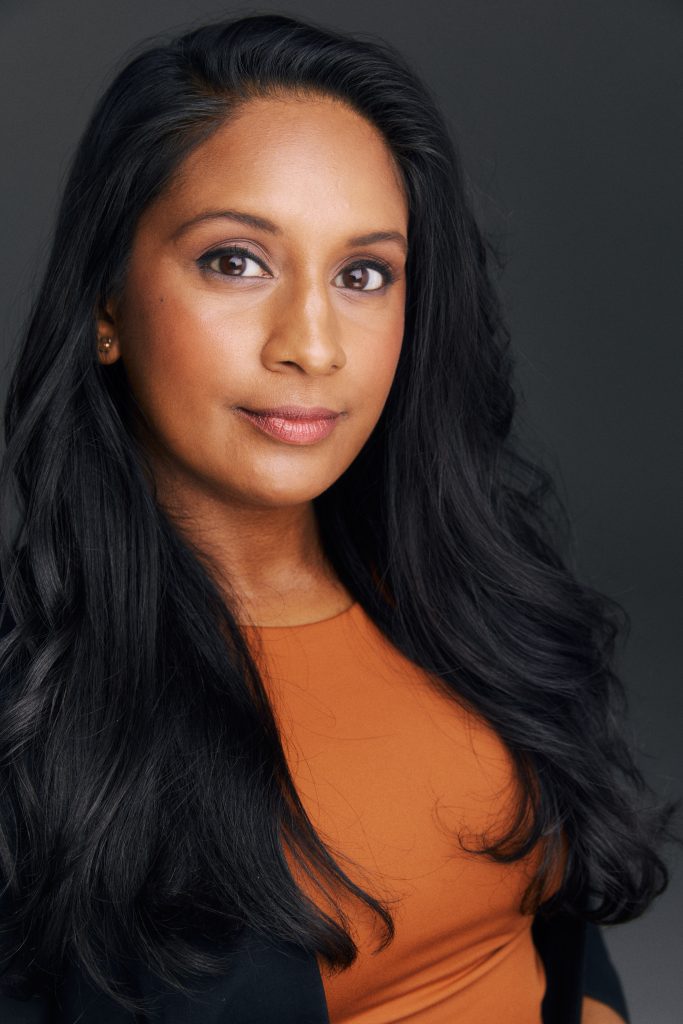
Learn more about Keisha Bissram and her work at keishabissram.com and watch the trailer for Black Cake on Youtube.