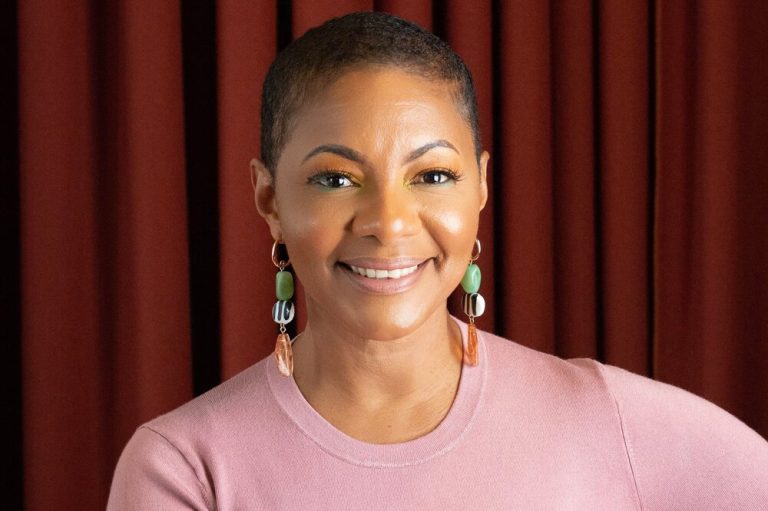

Meet Keisha Bissram, the Filmmaker Bringing Indo-Caribbean Women to the Center of the Story
Through her short film Black Cake and a growing body of creative work, this Trinidadian-American writer, actress, comedian, and filmmaker is creating the stories she once searched for, but could not find.
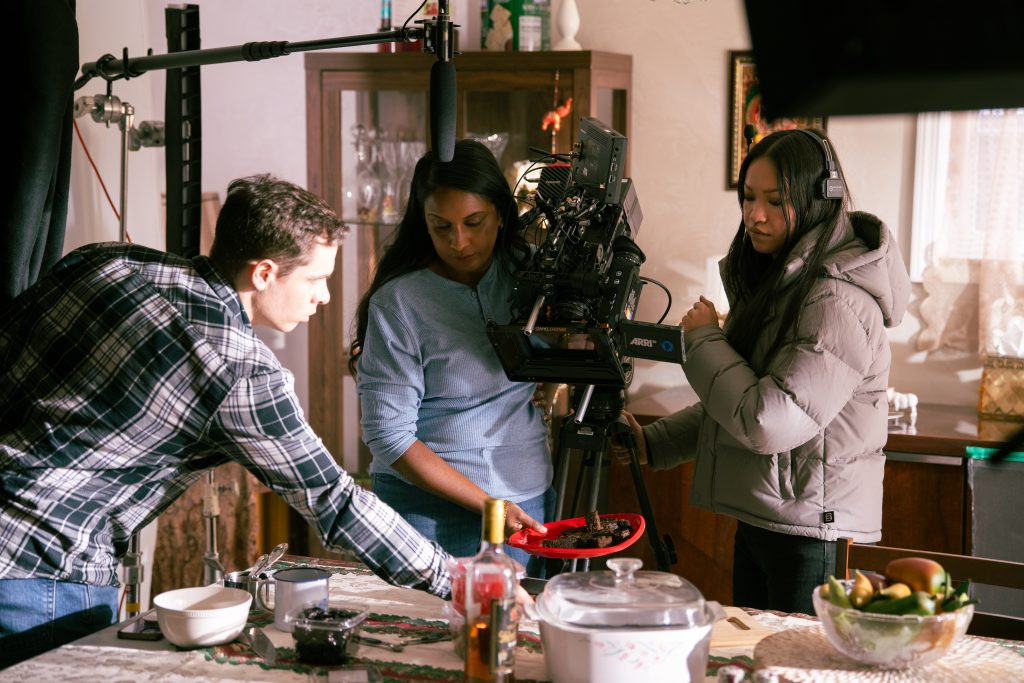
For much of her life, Keisha Bissram did what many children raised in immigrant households are encouraged to do. She pursued a practical education, earned a business degree, and followed a path that appeared to offer stability and security. It was a responsible decision and, in many ways, an expected one. Yet even as she fulfilled those expectations, another ambition remained impossible to ignore.
“Storytelling was always the thing pulling at me,” she says.
Today, Bissram is a writer, actress, comedian, and filmmaker whose work is helping to expand the visibility of Indo-Caribbean experiences on screen. Through projects such as Conversations in Apartment 3A, Simple Life with Tammy, Bancroft & Singh, and most recently Black Cake, she has built a creative practice rooted in explorations of family, womanhood, identity, memory, and belonging.
What distinguishes her work is not simply its subject matter, but the specificity with which she approaches it. Rather than attempting to tell universal stories by stripping away cultural details, Bissram moves in the opposite direction. She understands that the more honestly a story reflects the people and communities who inspired it, the more deeply it often resonates with audiences.
That understanding emerged gradually as she pursued acting professionally.
Discovering the Stories That Were Missing
After graduating from the Fashion Institute of Technology, Bissram began studying acting at The Barrow Group Theatre, before continuing her training at William Esper Studio. Like many aspiring performers, she immersed herself in scripts, classes, auditions, and the often unpredictable realities of building a career in the arts. What she encountered during those years was not necessarily overt exclusion, but something that proved equally significant: an absence.
“I started realizing how absent Indo-Caribbean stories were from film and television,” she says. “I didn’t see families like mine, women like the ones I grew up around, or the specific humor, tension, resilience, and contradictions that existed in our households.”
The realization was particularly striking because the people she knew growing up seemed inherently cinematic. The women in her family and community were intelligent, funny, resourceful, strong-willed, and endlessly complex. They navigated multiple cultures, carried family traditions forward, and managed responsibilities that often went unnoticed by the wider world. Yet when Bissram searched for reflections of those experiences in popular culture, she found remarkably few examples.
For many artists, such a realization becomes a source of frustration. For Bissram, it became a catalyst.
“I got tired of waiting for someone else to represent me,” she says. “If anyone was going to bring my talents to the spotlight, it would be me.”
WATCH THE BLACK CAKE TRAILER ONLINE
It is a statement that reveals much about her approach to creative work. Rather than viewing the lack of representation as a barrier, she began treating it as an invitation to create. Writing and producing became ways of addressing a gap she could clearly see, while simultaneously giving herself opportunities that didn’t depend on someone else’s vision or approval.
Creating Her Own Opportunities
Her transition from performer to creator represented a broader decision about agency.
For emerging artists, particularly those from communities that remain underrepresented in mainstream media, there is often pressure to wait for opportunities to appear. Bissram ultimately chose a different path. If the experiences and perspectives she wanted to see onscreen were not readily available, she would create them herself.
Over time, she developed projects that reflected her interests and perspective. Whether working in film, television, or comedy, she found herself repeatedly returning to questions about family relationships, cultural traditions, personal identity, and the ways people navigate competing expectations. Her work often balances humor and emotional depth, reflecting a worldview shaped by observation as much as imagination.
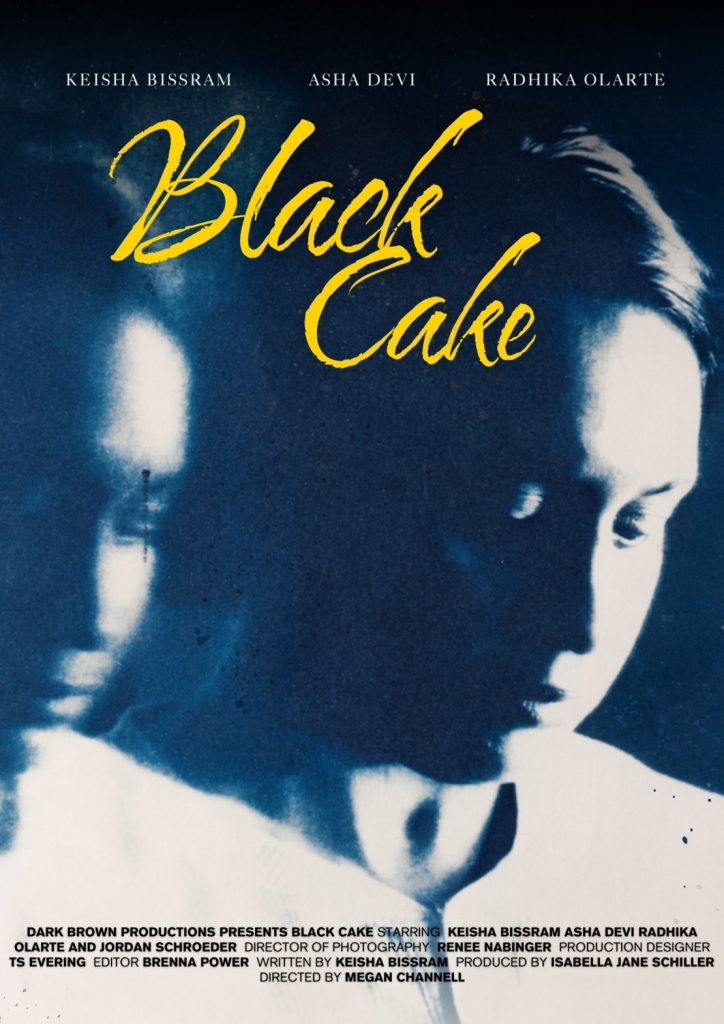
That combination of curiosity and personal experience eventually led her to create Black Cake, a short film that has become one of her most acclaimed projects to date.
The Personal Inspiration Behind Black Cake
At first glance, Black Cake is a story about grief and family. The film follows Sherry Sankar, an Indo-Caribbean woman attempting to navigate life after the death of her mother while confronting changing family dynamics during the Christmas season. Yet beneath that premise lies a deeper exploration of inheritance, memory, and the traditions that shape people’s lives.
“At its heart, the story is really about inheritance,” Bissram explains. “Not just physical inheritance, but emotional and cultural inheritance.”
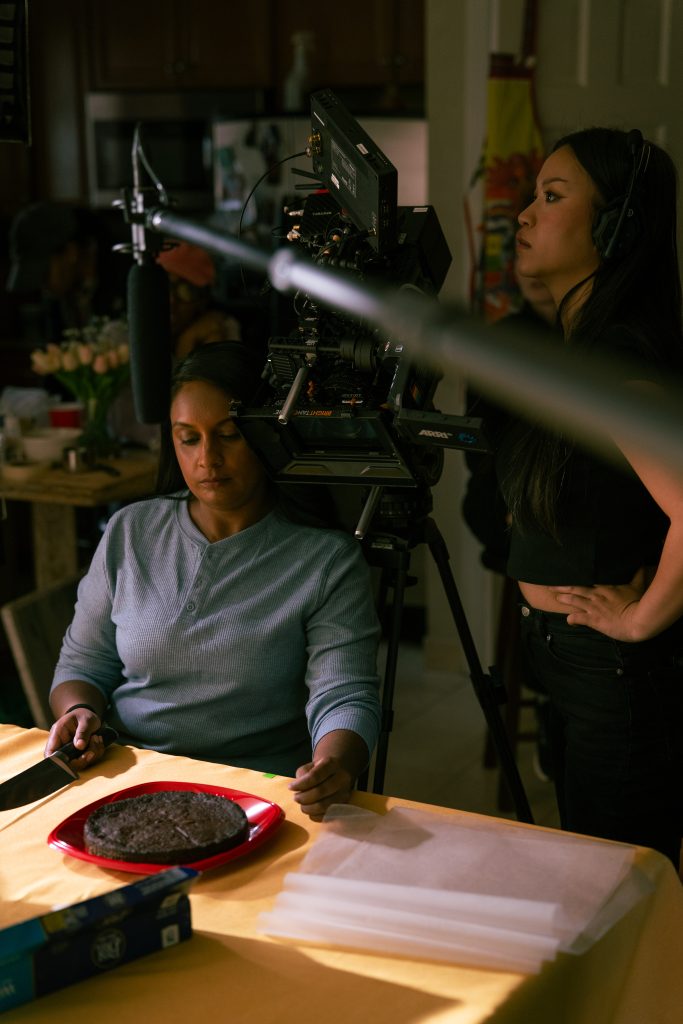
The idea emerged from traditions she knew intimately. Growing up, Christmas was accompanied by rituals that felt as permanent as the season itself. Among them was the preparation of black cake, a beloved Caribbean dessert that often requires months of advance preparation. Fruits are soaked well before the holidays arrive. Recipes are revisited. Techniques are debated. The process becomes part of the rhythm of family life.
“The black cake in the film is inspired by my mother,” Bissram says. “Every year, she soaks the fruits months in advance, bakes multiple cakes, and somehow the process becomes part of the rhythm of the season itself.”
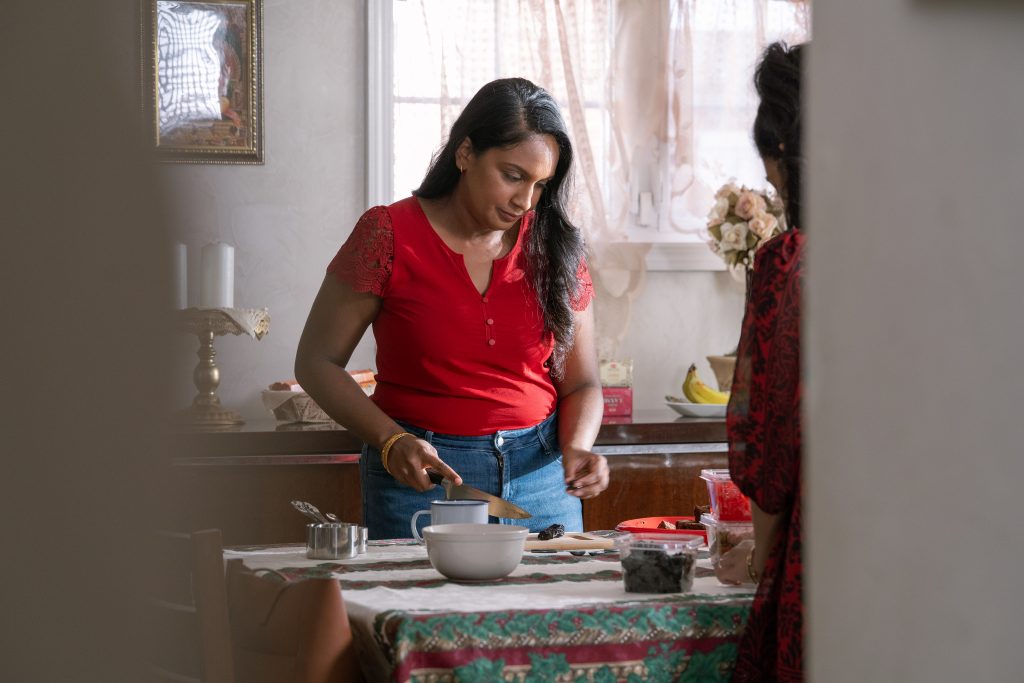
As she grew older, Bissram began thinking differently about those traditions. What once felt routine revealed itself to be a form of cultural preservation. Family recipes, holiday customs, music, and celebrations survive because people choose to carry them forward. More often than not, she observed, that responsibility falls to women.
“My mother’s black cake represents continuity, inheritance, labor, memory, and the quiet ways culture gets preserved inside the home.”
That insight became one of the film’s central ideas. What happens when the people responsible for preserving those traditions are no longer there? How do families adapt? What responsibilities are inherited by the next generation? And how does someone honor the past while still creating a future for themselves?
Although the film is rooted in an Indo-Caribbean family experience, those questions extend far beyond any single community.
Honoring the Women Who Inspired the Story
When discussing Black Cake, Bissram consistently returns to the women who inspired it. The film’s characters draw from family members, cousins, aunties, and community figures she observed throughout her life. Their influence can be felt not only in the story’s themes, but also in its emotional texture.
“Because I genuinely never saw them centered anywhere,” she says when asked why she wanted to place Indo-Caribbean women at the heart of the narrative.
“I grew up around Indo-Caribbean women who were hilarious, resilient, emotionally complicated, deeply giving, stubborn, loving, and exhausted all at once,” she says. “These women carried entire households, traditions, recipes, relationships, and emotional burdens quietly for years without recognition.”
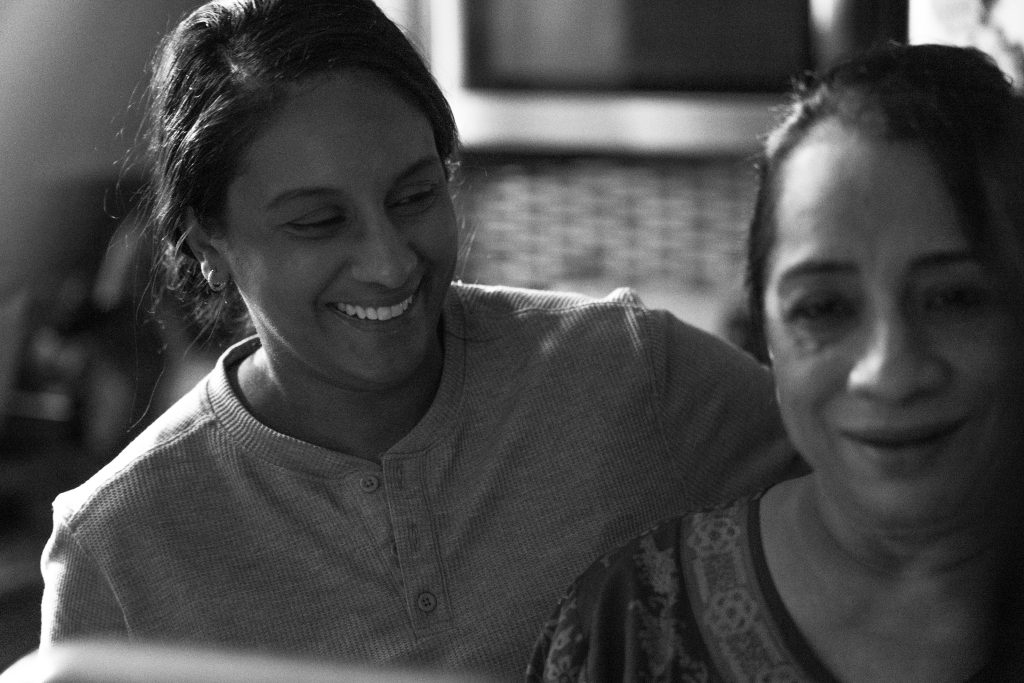
Those observations informed every aspect of the film, shaping characters whose relationships feel familiar precisely because they are imperfect. They disagree, frustrate one another, and navigate the same tensions that exist within many families, allowing the film to capture the complexity of real relationships rather than idealized ones.
“I wanted the women in Black Cake to feel recognizable. Not perfect nor idealized. Just deeply human and natural.”
That commitment to authenticity extended beyond the characters themselves. Bissram worked to incorporate details that reflected the world she knew growing up, including parang music, a beloved part of many Caribbean Christmas celebrations.
“It was the music we listened to around Christmas time,” she says. “I wanted it to be represented.”
Such details contribute to the film’s sense of place, grounding it in the world that inspired it and reinforcing the authenticity that runs throughout the project.
Building a Career on Her Own Terms
As Black Cake continues its festival run, Bissram remains focused on the future. She is currently developing Spotter, an espionage thriller that demonstrates both her creative range and her desire to explore stories beyond a single genre. She continues performing stand-up comedy as well, a discipline that allows her to engage audiences through a different form of storytelling.
What connects these seemingly different pursuits is a commitment to honest observation and meaningful storytelling. Whether writing a screenplay, performing stand-up, or developing a new project, Bissram remains interested in the lives people build, the choices they make, and the relationships that shape them.
“I want to continue building visibility for Indo-Caribbean stories and artists while creating work that feels emotionally truthful and expansive,” she says.
It is a goal that reflects how far she has come since first recognizing how narrowly many communities were represented onscreen. Rather than accepting those limitations, she chose to respond creatively, building work that allows audiences to see their families, relationships, and lived experiences reflected with honesty and care.

For emerging artists, there is something particularly inspiring about that journey. Bissram did not wait for the perfect opportunity or the perfect moment. She pursued the practical path expected of her, listened carefully to the creative instinct that continued calling her elsewhere, and eventually made the decision to trust it. The result is a body of work that is not only expanding representation on screen, but also demonstrating what becomes possible when someone chooses to create the opportunities they cannot find.
WATCH THE BLACK CAKE TRAILER ONLINE
CHECK OUT MORE OF KEISHA BISSRAM’S WORK: