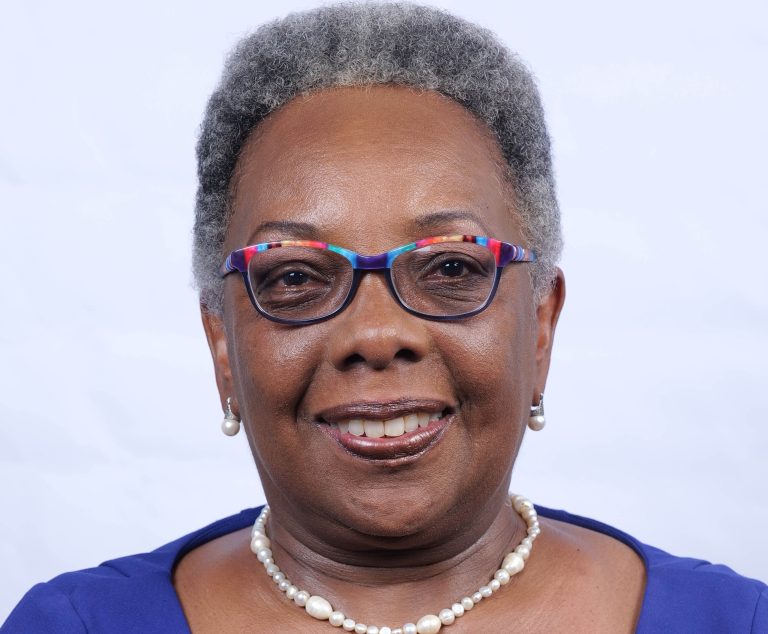
Keithlin Caroo-Afrifa: Cultivating Gender Justice Through Caribbean Food Systems
Keithlin Caroo-Afrifa is a Saint Lucia–born Caribbean social entrepreneur whose work at the intersection of gender equity, sustainable agriculture, and rural development is reshaping food systems across the region. Raised in a farming household, she developed what she describes as an early understanding of “community, resilience, and the quiet strength of rural women”—an awareness that continues to guide her leadership today. As Founder and Executive Director of Helen’s Daughters, a Saint Lucia–based organization advancing women farmers through training, advocacy, and market access, Keithlin has built a model that centers women not as informal contributors, but as essential actors in food security, climate resilience, and economic justice.
It is this sustained, community-rooted impact that has led to Keithlin being named a 2026 Women Impact Awards honoree, with the Awards to be presented at the Future Forward forum, taking place February 9–12, 2026, in Kingston, Jamaica. Convened by the Caribbean Philanthropic Alliance (CariPhil), Future Forward brings together leaders, advocates, and innovators committed to building equitable, people-centered solutions across the Caribbean and its global diaspora. The Women Impact Awards recognize women whose leadership is not only visionary, but structurally transformative—shifting power, strengthening systems, and delivering lasting impact.
Rooted in Rural Life, Built with Intention
Helen’s Daughters emerged from a contradiction Keithlin witnessed repeatedly: rural women farmers were sustaining Caribbean food systems while remaining excluded from policy, financing, and formal markets. Her decision to leave a career at the United Nations to address that gap was, as she describes it, “a leap of faith,” but also a strategic one. While the UN gave her “a global view of how systems work,” it also revealed “how they often fail to connect with grassroots realities.”
Starting Helen’s Daughters, she explains, was her way of proving “that civil society in the Caribbean can be more than just a beneficiary—it can be a partner in development.” She brought with her the rigor she learned in international institutions—monitoring and evaluation, financial management, accountability—while grounding the organization firmly in community leadership. Aware that Caribbean civil society is often perceived as informal or under-resourced, she was intentional about building “an organization that is professional, credible, and community-driven,” challenging the assumption that development must come from outside institutions rather than “within our own people and systems.”
Today, Helen’s Daughters has empowered thousands of women farmers across three Caribbean countries through programs that combine technical agricultural training, financial literacy, climate-smart practices, and pathways to entrepreneurship. A cornerstone of this work is the HD Ag-cademy, an innovative program approved as an alternative to Saint Lucia’s Good Agricultural Practices (GAP) certification—lowering long-standing barriers that have prevented small-scale women farmers from accessing formal supply chains.

Where Gender Justice, Climate Resilience, and Food Systems Meet
Keithlin’s leadership is guided by a clear understanding of how gender justice, climate resilience, and food systems intersect in the Caribbean. She articulates this connection directly: “They are completely interlinked—you can’t work in one without addressing the others.” In a region where food systems are increasingly strained by climate shocks, women—who make up a significant share of the agricultural workforce—are among those most exposed to environmental and economic vulnerability.
For Keithlin, gender justice means ensuring women farmers have equal access to land, resources, and decision-making power. Climate resilience means equipping those same women and their communities to “adapt and thrive despite environmental shocks.” Strengthening food systems connects both, because resilient food systems, she explains, “depend on inclusive participation and local innovation.” When women are empowered within agriculture, the outcome is not limited to equity alone—it becomes “an economic, environmental, and social transformation.”
This integrated approach has earned Keithlin international recognition, with features in BBC, National Geographic, and Forbes. She serves as an IICA Goodwill Ambassador and as a board member of the Equality Fund, where she continues to advocate for funding models that invest in long-term leadership, capacity, and wellbeing. In 2021, she was appointed a Member of the Order of the British Empire (MBE) for her contributions to agriculture and the advancement of rural women—an acknowledgment of both the scale and durability of her impact.
Recognition, Responsibility, and Building Forward
Reflecting on receiving the Women Impact Award, Keithlin describes the moment as “incredibly humbling,” noting that it feels like being seen “not just me, but the countless rural women whose stories and struggles often go unheard.” She is candid about the challenges of pursuing systems-level change in small island contexts, where nonprofit work is frequently underestimated or dismissed. Receiving the award, she says, “after eight years of work—the highs and the lows—feels validating,” and serves as a reminder “not to let anyone small up our contributions.”
More than personal recognition, she hopes the moment encourages other women across the region to act. “You don’t have to wait for big institutions to make change,” she insists. “You can build it right where you are, with conviction, courage, and community.”As a 2026 Women Impact Awards honoree, Keithlin Caroo-Afrifa represents the kind of leadership the Awards were created to uplift: grounded, courageous, and deeply committed to systemic change. Her journey—from rural Saint Lucia to regional influence—underscores a truth at the heart of Future Forward: when women farmers are equipped with resources, recognition, and agency, they do more than feed communities—they help secure the future of the Caribbean itself.