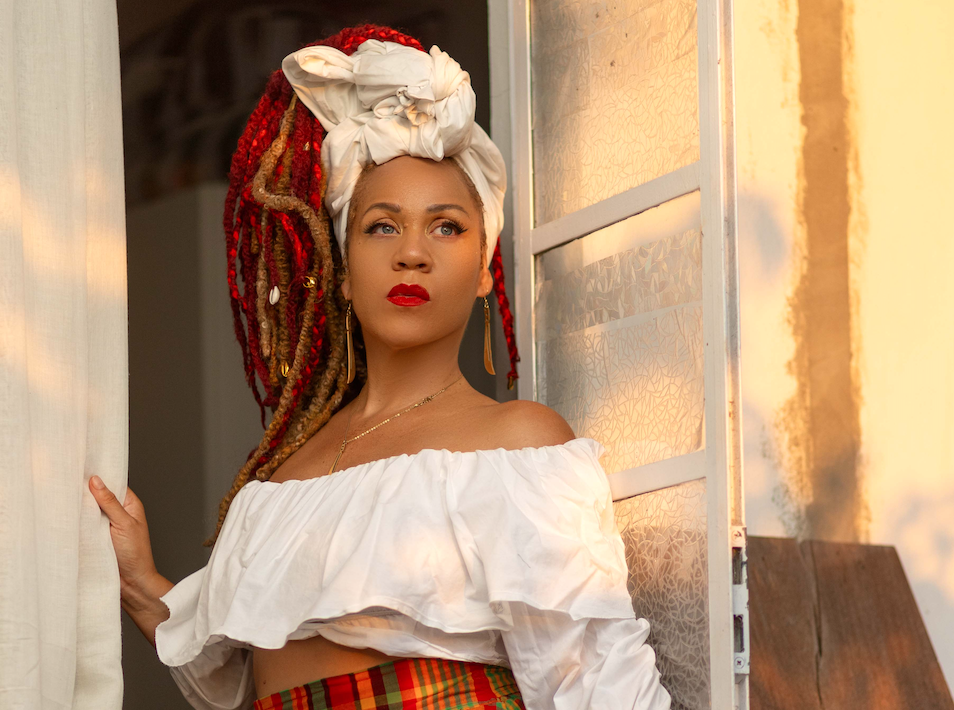
Fiona Compton of Know Your Caribbean is Reclaiming the Region, One Story at a Time
What happens when a Caribbean woman decides that waiting for someone else to tell her people’s story is no longer an option?
She builds the world’s leading platform for Caribbean history.

What began as Fiona Compton’s curiosity about old photographs has grown into Know Your Caribbean, a global movement reaching millions every month and inspiring people across the region and diaspora to rediscover who they are. Through powerful storytelling, historical research, film, podcasts, exhibitions, and education, the St. Lucian historian and cultural advocate is dismantling colonial narratives and replacing them with something far more powerful: Caribbean people telling their own stories, in their own voices.
But Fiona’s work goes beyond documenting the past. It’s about identity, healing, and reclaiming a history that has too often been fragmented, overlooked, or told through someone else’s lens. Whether championing reparative justice, celebrating the region’s extraordinary cultural diversity, or ensuring that future generations understand the legacy of those who came before them, she is helping reshape how the Caribbean sees itself—and how the world sees the Caribbean.
In this conversation, Fiona reflects on the origins of Know Your Caribbean, the importance of preserving culture in the digital age, the women who have always carried the region’s history, and why reclaiming our stories may be one of the most revolutionary acts of all.
Read Our Interview with Fiona Compton of Know Your Caribbean
Know Your Caribbean feels like more than a platform—it feels like a cultural intervention. What was the moment you realized this work had to exist?
Fiona: KYC started simply out of curiosity. I used to share old photographs of the Caribbean because I thought they were fascinating. Over time, I started looking closer, wondering who those people were and asking more and more questions.
Through that process, I learned one small thing at a time. The more I discovered, the more cheated I felt. I kept thinking, “How could I not know this?” If I grew up in the Caribbean and knew so little about our own history, how many more of us were living without that knowledge?
That realization became the beginning of everything.
What gaps in Caribbean history and storytelling were you most determined to fill when you started?
Fiona: I didn’t begin with one specific gap in mind. I just started doing the work. Big stories, small stories—they all mattered to me.
What truly drives me is humanizing our history. So often history is presented through dates and names, emotionless facts that disconnect us from caring. I hated history in school because of that.
My determination comes from removing the colonial centering of our narratives and reminding people that we fought, we resisted, and we continue to achieve extraordinary things that we should be immensely proud of.

What are some of the most persistent misconceptions about Caribbean history that you’re actively working to challenge?
Fiona: One of the biggest misconceptions is that the Caribbean is a monolith.
Yes, we are reggae, calypso, and soca—but we’re also bachata, tumba, and zouk. We are so many things.
We are predominantly of African heritage, but we eat cassava from Indigenous traditions, curry and roti with roots in India, and corned beef with Irish influences. Our culture tells stories of both resistance and diversity.
We speak Papiamentu, Kweyòl, Spanish, Sranan Tongo, and many other languages. English isn’t even the most spoken language across the Caribbean. I love celebrating all the different things we are.
What does it truly mean to “reclaim” Caribbean history in a way that feels both accurate and empowering?
Fiona: Reclamation means telling our stories through our own lived experiences.
For generations, much of Caribbean history was documented through colonial perspectives that flattened the humanity, creativity, and resistance of Caribbean people. Reclamation restores fullness to those stories—in Patois and Papiamentu, through soca and salsa, in all the languages people have dismissed as “broken,” when in reality there is nothing more vibrant than Caribbean expression.
It means honoring the people who carried culture forward through music, masquerade, language, spirituality, food, migration, and survival.
Accuracy matters because our communities deserve the truth. Empowerment comes when colonialism is no longer the narrator of our story.
Your work makes history feel alive and accessible. How do you balance depth with reach in a digital space?
Fiona: I think about history as something people should feel, not just study.
I want people to laugh and cry—mostly good tears, connected tears, tears of remembering.
Digital platforms move quickly, so I try to meet people where they are while respecting the depth of the subject. Sometimes that means short videos, archival footage, music, visuals, personal storytelling, or everyday language that feels familiar.
The goal is never to water history down. It’s to open the door in a way that invites people in. Once people feel emotionally connected, they often want to learn more for themselves.
How do you define Caribbean culture today, especially across diaspora and digital communities?
Fiona: Caribbean culture today is movement, creativity, and connection.
It exists in the islands, on the mainland in places like Belize, Guyana, and Panama, within diaspora communities, online spaces, kitchens, dance floors, family traditions, and everyday conversations.
Caribbean people continue shaping culture wherever they go while carrying pieces of home with them. That’s simply what we do—home never leaves us.
Digital spaces have allowed Caribbean people across different nations and backgrounds to reconnect in powerful ways. There’s a growing sense of regional identity and shared understanding, especially among younger generations searching for history and cultural grounding.
Young people today care less about the rigid expectations previous generations were taught to uphold. They are redefining what it means to be Caribbean, and I am absolutely here for it.
Caribbean women have always been central to preserving culture. How do you see their contributions reflected—or overlooked—in historical narratives?
Fiona: Caribbean women have carried culture across generations through storytelling, market traditions, spiritual practices, music, healing knowledge, food, community organizing, and forms of resistance we often don’t even recognize as resistance.
They preserved memory in ways that were rarely documented because much of their labor existed outside official archives.
Historical narratives have often centered political leaders, colonial figures, or male voices while overlooking the everyday cultural work women sustained. Even now, many women who shaped communities are remembered within families and neighborhoods rather than through institutions or textbooks.
Their contributions deserve far greater visibility and recognition.
What has been the most unexpected impact of Know Your Caribbean on your audience or community?
Fiona: One of the most unexpected impacts has been seeing people reconnect emotionally with their identity.
Many people tell me they grew up feeling disconnected from Caribbean history or believing their culture wasn’t important enough to study deeply.
Watching people become curious about their ancestry, language, traditions, and island histories has been incredibly meaningful. I’ve also seen people begin documenting their elders, preserving family photographs, learning traditional practices, and taking pride in parts of Caribbean culture they once overlooked.
To me, that’s the greatest victory of all.
What stories or perspectives within the Caribbean are still not being told, and why do you think that is?
Fiona: There are still many untold stories about rural communities, traditional masquerades, Indigenous survival, women’s histories, migration between Caribbean islands, labor movements, spiritual traditions, oral histories, and the lives of ordinary Caribbean people.
Much of Caribbean history still exists in memory rather than formal archives. Funding also shapes visibility. Stories connected to tourism often receive more attention than stories of resistance, labor, cultural survival, or community knowledge. Many elders carry knowledge that has never been recorded, making preservation incredibly urgent.
Another conversation we don’t have enough is about the prevalence of sexual abuse, child abuse, incest, and domestic violence across the Caribbean. Alongside young women who have shared experiences of abuse, I’ve had more conversations with men who have spoken about abuse they experienced, often perpetrated by women.
So many people I know have been affected by abuse within families and communities, yet it remains largely unaddressed. It feels like a wide-open Caribbean secret, and it deeply troubles me.
What does it mean to you to be a Caribbean woman telling her own story in this format?
Fiona: It feels deeply personal and deeply necessary.
As a Caribbean woman, I have been influenced and shaped by so many Caribbean women who came before me. Being able to tell these stories through my own lens means creating space for honesty, complexity, and, above all, pride.
It also means showing Caribbean people that our stories deserve care, visibility, and to be shared on our own terms.
There is immense power in documenting ourselves while we are still here to speak for ourselves.

Explore more of Fiona Compton’s work on Instagram and KnowYourCaribbean.com.