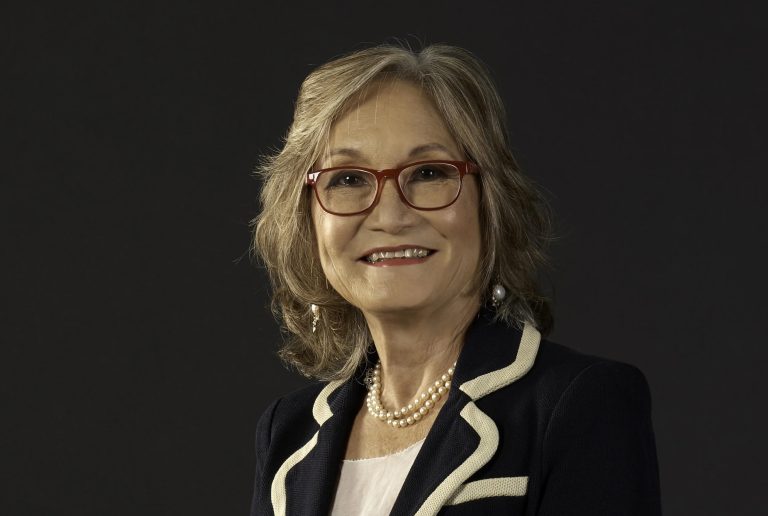
Dr. Luz Longsworth’s New Book Looks Beneath the Surface of Leadership
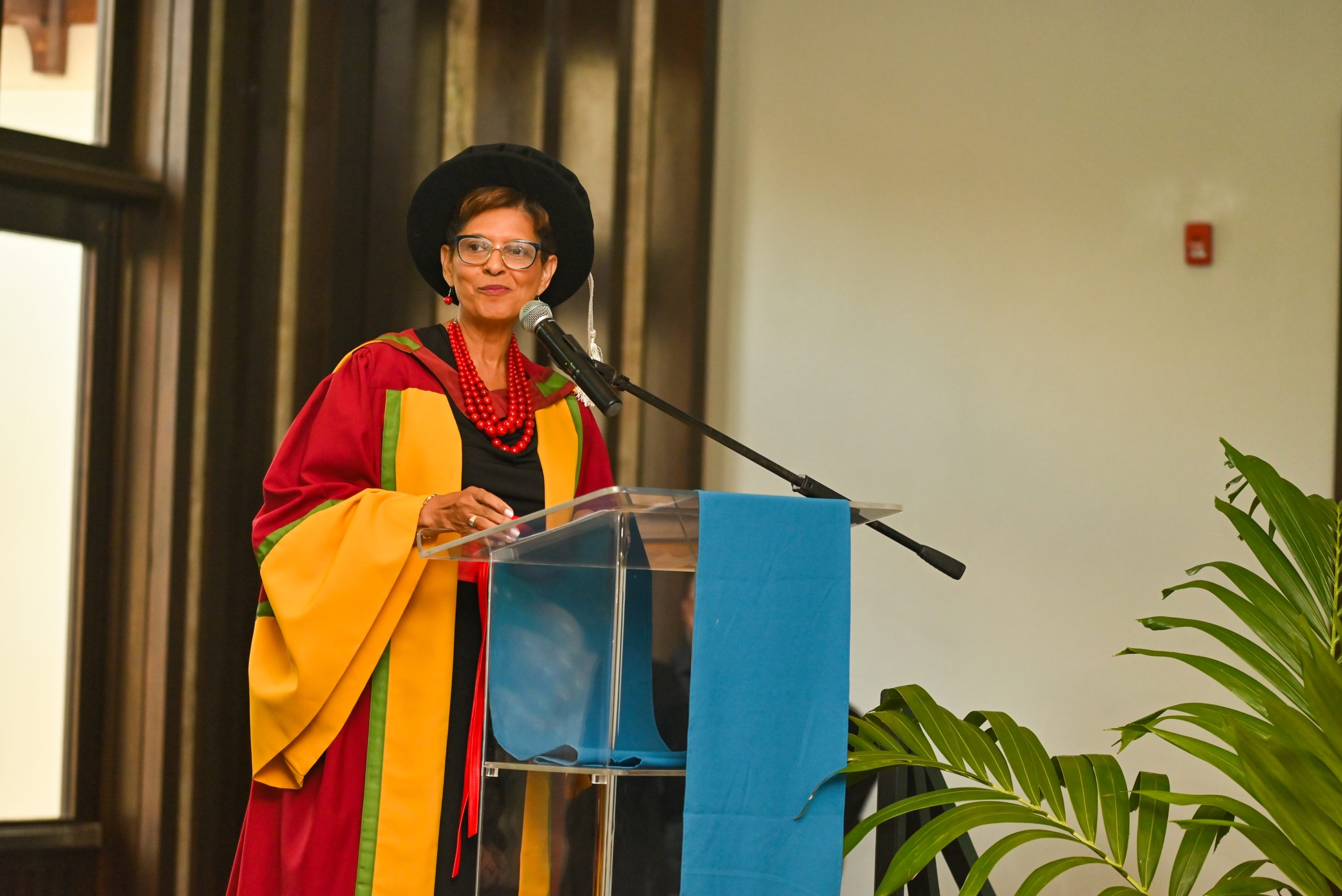
For much of her career, Dr. Luz M. Longsworth has been interested in what makes people capable of leading well. That question has taken her through nearly three decades at The University of the West Indies, senior leadership in higher education, work across the private sector and, most recently, the development of thousands of employees through Sandals Corporate University.
Now, after more than 30 years of working across higher education, business and organizational development, the Jamaican leadership development expert is turning that experience into a book.
Through the Glass Bottom: Navigating Leadership’s Hidden Currents examines the forces that influence leadership, but are not always immediately visible. Rather than focusing solely on titles, promotions and formal authority, Longsworth asks readers to look beneath the surface at the relationships, expectations, organizational dynamics, cultural pressures and personal beliefs that can shape a person’s ability to lead and advance.
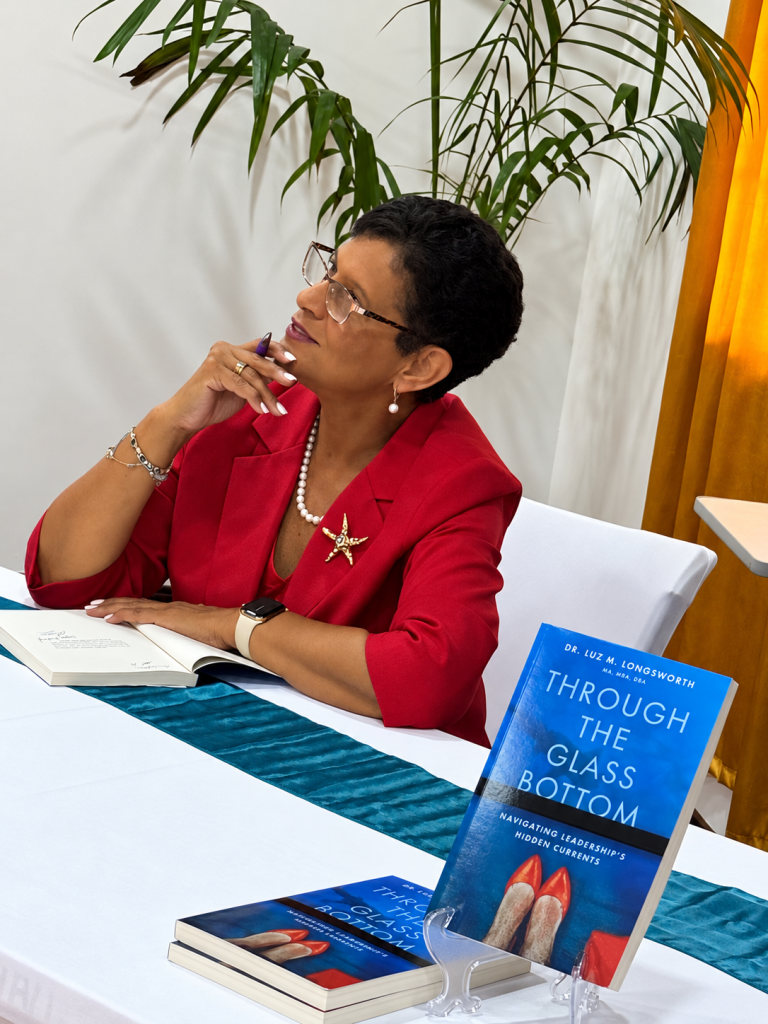
The result is a book particularly relevant to women navigating increasingly complex professional environments, but its central questions extend beyond women and into the broader question of what it means to lead without losing sight of who you are.
Looking beneath the glass ceiling
The title comes from a metaphor Longsworth encountered while driving along Jamaica’s north coast and reflecting on a difficult experience within an organization she had served.
The conventional language surrounding women and leadership has long focused on the glass ceiling, the invisible barriers that prevent women from reaching senior positions. Longsworth argues that looking only upward, however, can leave women unaware of what is happening underneath them.
“I was looking up and breaking glass ceilings,” she recalls, “but I had neglected to understand what were the undercurrents that were also impacting me and other women in the organization.”
The image of a glass bottom boat, inspired by the Caribbean Sea around her, offered a different way of thinking about the problem. A glass bottom allows passengers to see what is happening beneath the surface while remaining safely above the water. For Longsworth, it became a useful metaphor for understanding the hidden dynamics of professional life.
“Through the Glass Bottom boat, you are safely guided to see the beauty and the dangers of the deep,” she explains.
Those hidden currents can include relationships, conversations, external influences and organizational politics, but Longsworth is careful not to reduce the concept to office politics alone. Some currents can be environmental or cultural changes that leaders need to recognize before they become obvious.
“As I mentioned in the book, the unseen organizational dynamics are often what influences decisions, actions and outcomes,” she says. “The key thing for future leaders is to be aware of these hidden elements and to intentionally look out for them.”
That awareness, she argues, can change the way leaders make decisions, understand their organizations and protect their own ambitions.
A book shaped by experience
Longsworth did not begin her career intending to become a leadership expert. Her original ambition after university was to become a professor at The University of the West Indies and devote herself to teaching, research and service. Leadership, however, had already been a recurring part of her life.

She had held leadership positions at Holy Childhood High School in Kingston and at UWI, where she led student clubs and represented her department and faculty on governance boards. Her academic work also began to deepen her interest in the subject. While completing her first master’s degree in Hispanic Studies, she examined the role of the dictator in Latin American literature and became fascinated by the ways leadership affects people, societies and institutions.
Over time, her experience convinced her that leadership should not be treated as an instinctive quality that some people simply possess.
“Good leadership needed to be looked at as more than just intuitive, inborn talent,” she says. “It required the same level of discipline and study as any profession.”
That belief is central to the book. Longsworth draws on the lessons of a career that has crossed sectors and national borders, including her years at UWI and her current role at Sandals Corporate University, where she oversees training and development for more than 20,000 team members across nine Caribbean countries. Her professional experience gives the book an unusual breadth, allowing her to examine leadership from the perspective of academia, business, organizational development and regional capacity building.
What women cannot always see
One of the book’s most important questions concerns the particular challenges women face once they enter leadership spaces.
Longsworth says conversations with her daughter and her daughter’s friends helped reveal how much has changed for women, while also demonstrating how much remains familiar. Women today may have greater visibility and access to leadership than previous generations, but many still feel compelled to prove that they are sufficiently qualified, work harder than their male peers and continually justify their place in the room.
“The Impostor syndrome is just as real for this new generation of women leaders as it was for us,” she says.
At the same time, she sees an important difference in the generation coming behind her. There is, she says, a stronger sense of sisterhood among younger women leaders and a growing desire both to receive mentorship and to become mentors themselves.
That idea of women helping women is closely connected to the glass bottom metaphor. Longsworth argues that women should not only learn how to recognize the currents beneath the surface, but should help one another navigate them.
Her argument also challenges the assumption that advancement requires women to adopt traditionally masculine models of leadership. Throughout the book, authenticity, empathy and kindness are not presented as weaknesses to be overcome, but as qualities that can strengthen leadership.
“It hasn’t been easy!” Longsworth says of remaining true to those values throughout her own career. “But what I do urge is that all leaders be true to who they are and always remember that you have lives in your hands, so empathy and kindness are key to good leadership.”
Leadership as service
Longsworth’s understanding of leadership has evolved significantly over the course of her career. Early on, she says, she believed leadership meant being at the front and serving as the face of an initiative. Experience taught her something different.
“To truly make an impact and to bring about change especially on a large scale, the leader must be the servant,” she says.
For Longsworth, this is more than a familiar leadership slogan. It reflects a shift from measuring leadership primarily through personal achievement to measuring it through the development of others.
“Leadership is less about achievement and more about development of other leaders,” she explains.
That philosophy has influenced her work in education and workforce development. During her tenure as Principal of the UWI Open Campus, the institution operated across dozens of locations and multiple Caribbean countries. Longsworth says the experience demonstrated that leadership could not be centralized. Strong leaders had to be developed throughout the organization, with enough cultural understanding to respond to the realities of different territories while remaining connected to a shared vision.
Her current work at Sandals Corporate University has reinforced the same lesson. Leadership development, she argues, should not be reserved for people who already occupy senior positions. Organizations need to identify and develop potential leaders at every level because leadership can emerge from anywhere.
“Leadership development is not a training exercise,” she says. “Leadership development is lifelong and a leader who stops learning stops leading.”
The courage to lead without losing yourself
The book also considers the personal cost of ambition. Its discussion of burnout, self doubt, values, boundaries and authenticity reflects Longsworth’s belief that professional success should not require people to abandon themselves in order to achieve it. The publisher describes the book as a guide for women seeking to lead with clarity and confidence while navigating unspoken expectations, cultural barriers, burnout and self doubt.
That message is particularly significant for women who have spent their careers negotiating the expectations attached to leadership. Longsworth does not suggest that women should become less ambitious. Instead, she encourages them to become more conscious of the choices they make in pursuit of that ambition.
The question, ultimately, is not simply whether a woman can reach the next level. It is whether she can do so while remaining aligned with her values and understanding the environment in which she is operating.
This is where the book’s central metaphor becomes particularly useful. Seeing what is beneath the surface does not necessarily mean avoiding difficult waters. It means entering them with greater awareness.
A Caribbean perspective on leadership
Although the questions explored in Through the Glass Bottom will resonate with readers well beyond the Caribbean, Longsworth’s perspective is firmly shaped by her regional experience.
She describes Caribbean women as “innately strong and fierce women,” drawing partly on her own upbringing in a household of outspoken women. Her mother, who spent more than four decades in a male dominated industry, became an early model for the kind of leadership Longsworth would later embrace: firm but fair, disciplined but deeply concerned about the people under her care.
That combination of strength and humanity runs throughout Longsworth’s thinking about leadership.
She also sees leadership development as a critical issue for the Caribbean itself. The region has considerable talent, she argues, but institutions need to be more intentional about developing that talent before leadership gaps emerge. Strategic plans should include plans for developing the people who will eventually be responsible for carrying them out.
Her optimism comes from the young leaders she encounters through teaching, coaching and mentoring. In her experience, most emerging leaders already possess the talent and willingness to excel. What they need is opportunity, preparation and people willing to invest in them.
Leadership as a lifelong journey
Ultimately, Through the Glass Bottom is less concerned with prescribing a single model of leadership than with encouraging readers to become more observant, intentional and authentic leaders.
Longsworth does not see leadership as a destination or a title. She describes it instead as an ongoing process of developing oneself while helping others develop as well.
“Leadership is a lifelong journey of intentionally setting out to improve yourself and others around you,” she says.
That philosophy also shapes what she hopes readers will take from the book. For Longsworth, the measure of a career is not simply what a person has accomplished or the positions they have held. It is the effect they have had on the people and places around them.
“True legacy lies not in what you did and accomplished but who you touched and if on your leadership journey you left the people and the places you touched a little better than you found them.”
For women entering leadership, and for those who have already spent years navigating it, that may be the most important invitation in Through the Glass Bottom: to stop looking only at what is visible, examine the currents beneath it, and decide how to move forward without surrendering the person you are in the process.
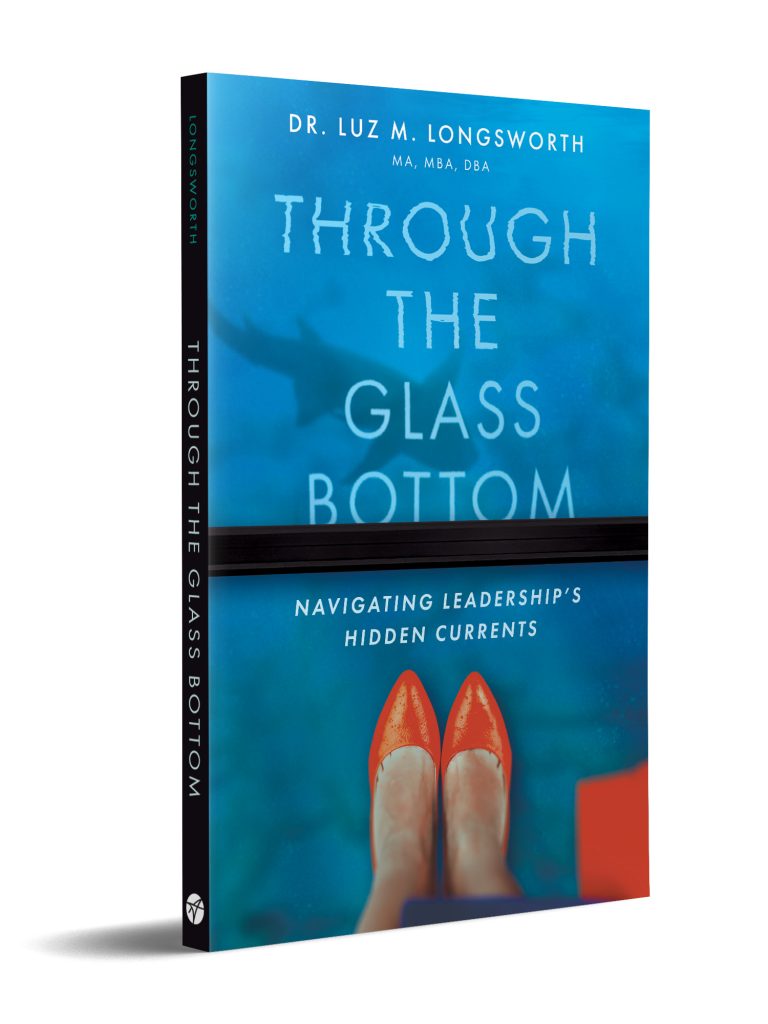
Find out more about Dr. Luz Longsworth at www.luzlongsworth.com and purchase Through the Glass Bottom: Navigating Leadership’s Hidden Currents on Amazon and Kindle.