Belinda Morrow and the Long Work of Protecting Jamaica’s Sea
At the White River Fish Sanctuary in Ocho Rios, Jamaica, a community-led effort to restore depleted fishing grounds has grown into a broader model of marine conservation—one that connects healthy reefs and fisheries with the livelihoods and future of the people who depend on them.
A Place She Has Known All Her Life
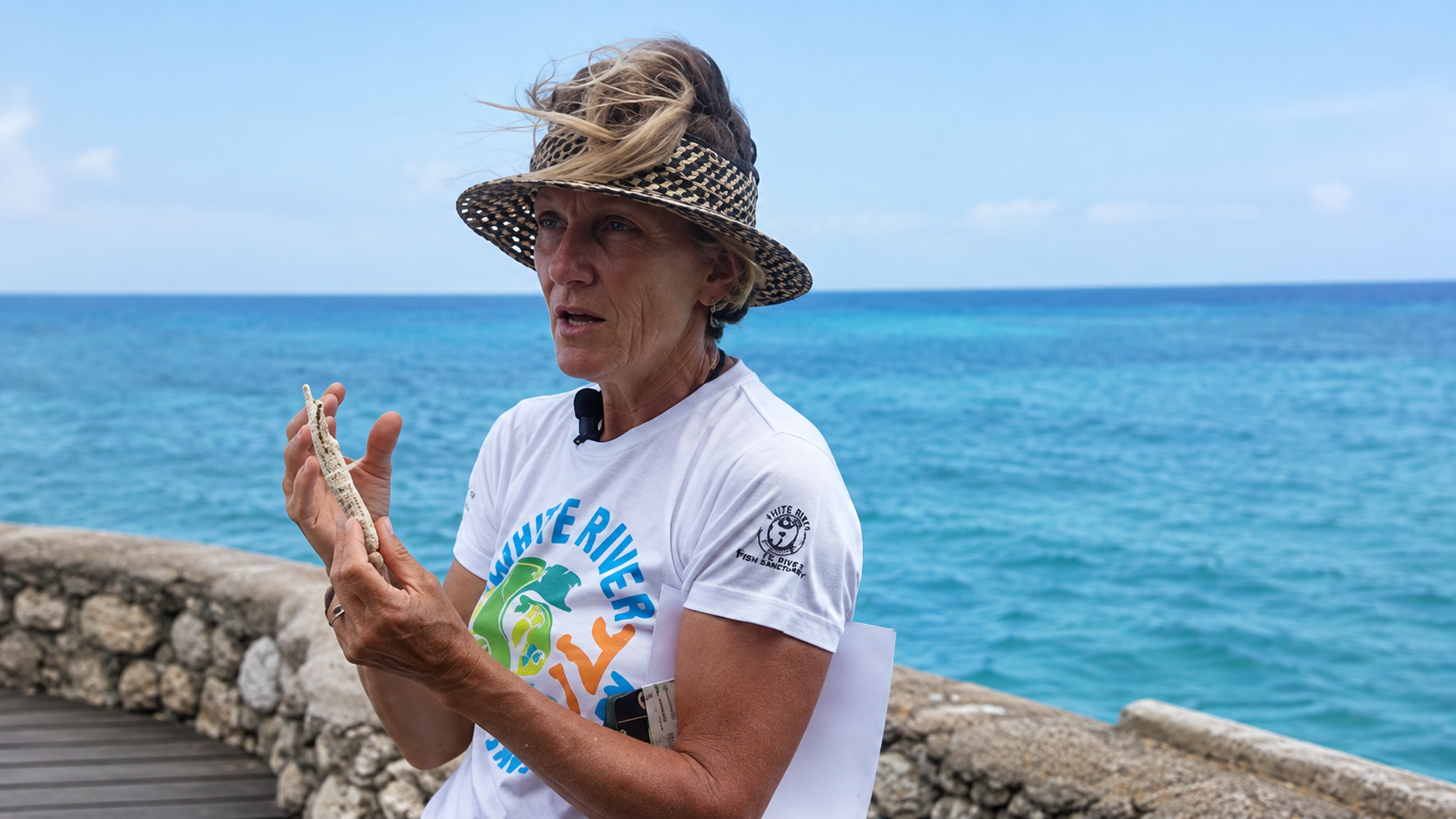
Long before Belinda Morrow became involved in marine conservation, she knew the waters around White River as a place to swim, snorkel and fish.
Morrow grew up about five miles from the coast and remembers a time when the area was largely home to local residents and fishermen. The sea was part of everyday life, and its abundance seemed natural. Over the years, however, she watched that abundance diminish.
“You saw this thing where the fishing became smaller and smaller,” she says.
By marriage, Morrow is a fourth-generation member of the family behind Jamaica Inn, the historic family-run hotel in Ocho Rios that has been operated by the Morrow family since 1958. She also oversees The Colliery, her birth family’s farm in the hills of St. Ann, and has remained closely connected to the natural environment around her.
Her involvement with the White River Fish Sanctuary began after she attended a community meeting about the possibility of establishing a protected marine area. The fishermen were already concerned about declining catches and had heard that sanctuaries could help replenish fish populations.
“I said, ‘I’ll come and do whatever.’” She did not realize how much that decision would demand.
Starting With the Fishermen
The sanctuary was not conceived as an environmental project imposed on a fishing community. It grew from a practical problem: there were fewer fish to catch.
Initially, Morrow says, the fishermen viewed conservation primarily as “a means to an end.”
“We wanted more fish. We heard that this sanctuary thing works, but we didn’t quite know what it was.”
There was also skepticism about Morrow herself. Although she had grown up in the area and knew many of the fishermen personally, her connection to Jamaica Inn made some question her motives.
“They didn’t trust me, because I’m the one who had the big hotel,” she says. “So, even though I’d born and grown up here, and I knew them, we used to fish side by side, there was still this feeling, ‘Well, something must be in it for you.’”
Trust could not be demanded; it had to be built, she recalls.
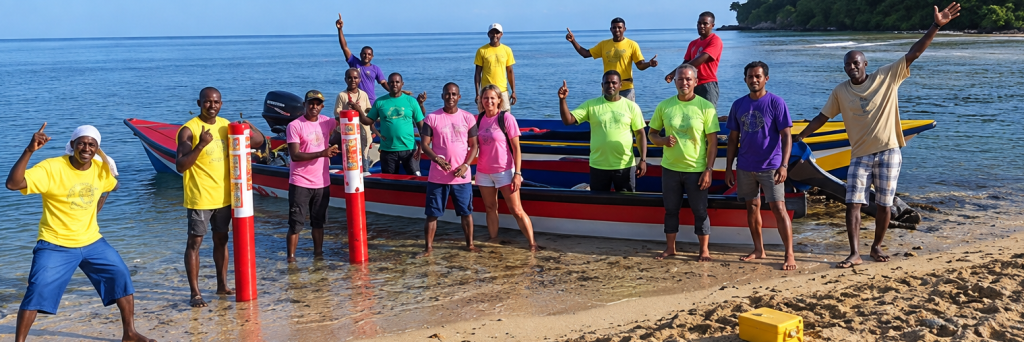
For two years, Morrow and members of the fishing community met almost every Monday beneath the White River bridge. They discussed the proposed sanctuary, debated its boundaries and worked through the practical question of how fishermen could protect part of their fishing grounds without losing their livelihoods.
That sustained engagement became one of the foundations of the sanctuary. Rather than asking the community simply to accept conservation, the process gave fishermen a role in deciding what protection would look like.
The sanctuary was eventually established in 2017 as a Special Fishery Conservation Area and is managed through the White River Fishermen’s Association and the White River Marine Association. The 150-hectare protected area was created to address declining fish populations and reef health while keeping local stakeholders involved in its management.
Morrow is careful not to take sole credit for what followed.
“I did not do this on my own. It’s a community effort. I might have been the engine,” she says.
A Savings Account in the Sea
One of the challenges was explaining why fishermen should leave an area alone when they already felt they were not catching enough.
Morrow found that the most effective explanations were often the simplest. She compared the sanctuary to a savings account.
“The sanctuary is your savings account,” she remembers explaining. “The fish outside is the interest. You’re going to catch the interest. You have to leave the money in the bank alone.”
The concept was straightforward: fish protected inside the sanctuary would have an opportunity to grow and reproduce, eventually contributing to the surrounding fishery.
There is evidence that the approach works. Monitoring at White River recorded a 55 percent increase in fish biomass during the sanctuary’s first five years, alongside increases in fish numbers and coral cover.
But for Morrow, the sanctuary’s value has never been only about the numbers.
It has created a place where fishermen, residents, students, businesses and conservationists can talk about what is happening to the marine environment, and about what happens on land that ultimately reaches the sea.
“If you don’t have a platform, how do you have the conversations?” she asks. “The sanctuary gives you that platform.”
When the Coral Died
Protecting fish eventually led the sanctuary deeper into the question of what makes a healthy fishery possible.
Coral reefs provide habitat for marine life and help protect coastlines from the force of waves and storms. But Jamaica’s reefs have experienced severe decline over decades. Jamaica Inn reports an 85 percent reduction in coral coverage since the 1970s.
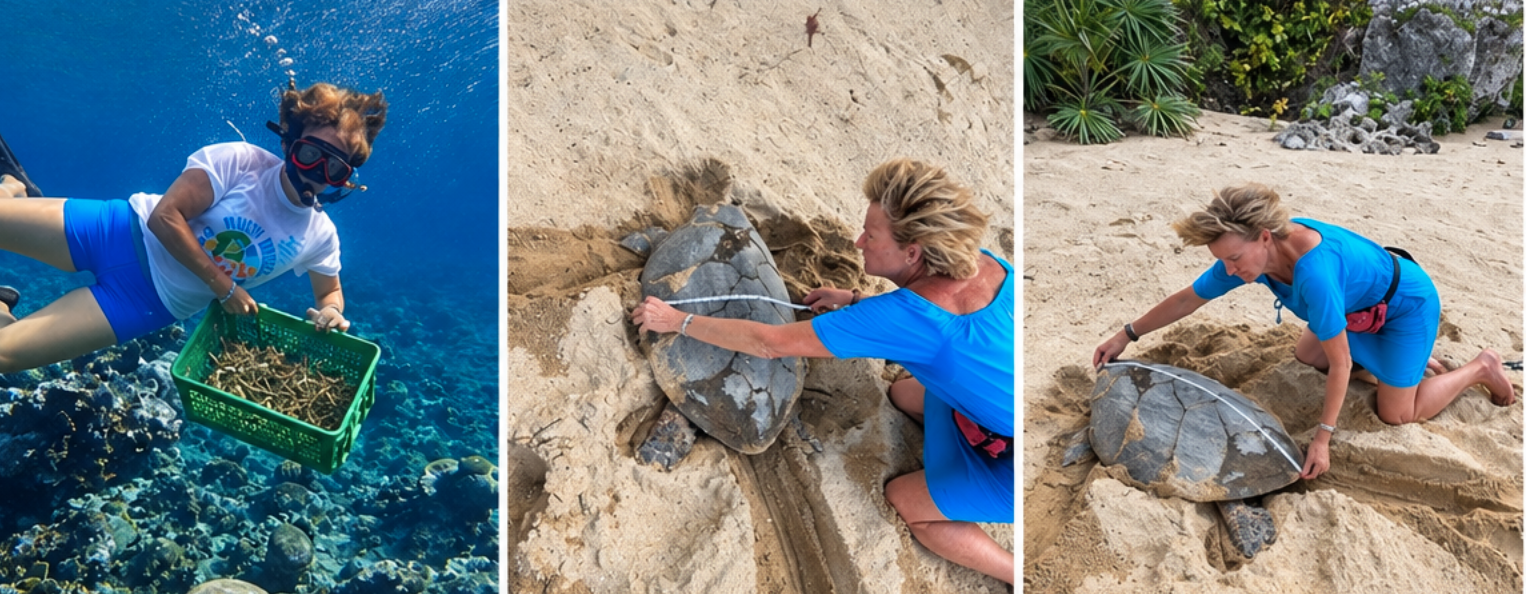
The White River team began growing and transplanting reef-building corals, including staghorn and elkhorn varieties. Local community members were trained to scuba dive and participate in coral gardening, turning restoration into another opportunity for people from the surrounding area to become directly involved in protecting the marine environment.
Then, in 2023, unusually warm ocean temperatures brought a devastating coral-bleaching event across the Caribbean.
At White River, the corals the team had worked to cultivate were affected.
“Everything was white,” Morrow recalls. “Everything was bleaching. Everything was stressing.”
Within months, the corals had died.
“By October, November, everything was brown-gray. It had all died.”
The experience was devastating. Morrow says she did not go into the sea for about six months.
“I thought, ‘Well, what are we doing? How can things come back? I don’t know what to do. Are we wasting our time?’”
The question gets to the heart of the challenge facing coral restoration today. Local restoration can help repair damaged habitat, but it cannot by itself reverse the rising ocean temperatures that are placing reefs under increasing stress.
The sanctuary nevertheless went looking for what had survived.
Starting Again
The team found small colonies of Acropora corals that had remained alive through the extreme temperatures. Working with other conservation organizations along Jamaica’s north coast, they began identifying and mapping surviving colonies that could provide material for future restoration.
“One has to assume they’ve been through the high temperatures,” Morrow says. “All the other corals are dead. They have survived, they’re growing. They must be somewhat resilient.”
That discovery gave the team another reason to continue.
Then last year, Hurricane Melissa devastated the sanctuary’s coral nurseries, creating another setback. Once again, the response was to rebuild.
The rebuilt nurseries now have capacity for approximately 1,200 coral fragments and 3,000 micro-fragments annually. To date, 1,500 micro-fragments have been outplanted, with a further 1,000 coral fragments and 3,000 micro-fragments targeted for outplanting by the end of 2026.
For Morrow, the lesson from repeated setbacks is not that restoration is futile, but that environmental recovery requires persistence.
“Some people might say, ‘Well, it’s a waste of time,’” she says. “But you’ve got to keep on doing something.”
She has also witnessed evidence that damaged ecosystems can respond when given protection and time.
“I didn’t think corals could grow back,” she says. “I grew up thinking, well, you know, they take too long or it doesn’t grow back. But in fact, they do grow back.”
Conservation Has to Work for People
The White River Fish Sanctuary has gradually expanded beyond the question of protecting fish.
Today, six Game Wardens patrol the sanctuary and surrounding waters, providing 16 hours of daily coverage. The wardens are local fishermen themselves, continuing the principle that the people closest to the resource should have a role in protecting it.
Education has become another part of that work. More than 80 students participated in the sanctuary’s environmental program during the 2025–2026 school year, while 32 children participated in Learn-to-Swim classes in 2026.
The sanctuary is also addressing some of the economic pressures facing fishermen. A cold-storage facility launched in March 2026 has already stored more than 1,000 pounds of fish for the White River Fishermen’s Association, giving fishermen the ability to hold their catch and wait for a fair market price rather than selling quickly because of spoilage.
For Morrow, these initiatives are connected.
The same is true of the Jamaica Inn Foundation, the nonprofit organization associated with the hotel that supports local youth and marine conservation. Its funding has helped the sanctuary purchase equipment, support operations and pay wardens, while its environmental partnership includes the sanctuary’s coral restoration work.
The relationship illustrates a larger possibility for tourism in Jamaica: that businesses whose prosperity depends upon the natural environment can also invest in protecting it.
Looking Beyond the Water
The sanctuary has also become a vehicle for addressing problems that begin on land.
More than 2,500 pounds of plastic have been collected from the White River area through waste-separation initiatives, roughly the equivalent of five full garbage trucks. By December 2026, another 40 waste-separation bins are expected to be distributed at Exchange School, reaching approximately 320 students.
Morrow has learned that changing behavior requires more than telling people what they are doing wrong. She often uses humor to help people understand how quickly what happens on land can become a marine problem.
She remembers someone questioning the value of cleaning up the river because an approaching storm would simply wash the waste away.
“And I remember this guy coming to me and saying, ‘Never mind, we don’t know about the cleanup. Storm coming. We clean. Everything washed away.’”
The irony, of course, is that the waste does not disappear. It moves downstream.
“There’s a total disconnect between the fact that the plastic bottles that had been all in the river have washed into the sea.”
The sanctuary gives her a place to make that connection visible.
A Different Kind of Legacy
Morrow has stepped back from the intensity of the sanctuary’s earliest years, but she remains a director and continues to contribute her knowledge and local experience.
She does not point to one particular achievement when asked what makes her proudest. Instead, she talks about the fact that the effort has endured.
“It started as a conversation with some interested parties and some fishermen,” she says, “and that it wasn’t just a bright spark that just decided to die.”
That endurance is significant. Conservation projects can lose momentum when the initial enthusiasm fades, and marine restoration is particularly vulnerable to forces beyond the control of any single community. The White River experience has included depleted fish stocks, coral bleaching, the destruction of restoration infrastructure and the slow work of changing human behavior.
Yet the work continues.
Morrow’s hope is that Jamaica will build more sanctuaries around its coastline, recognizing that marine conservation is not simply about protecting fish. It is about protecting the reefs and coastal ecosystems that support communities and one of the country’s most important economic sectors.
“We really need the whole island in order to protect the island,” she says. “These sanctuaries are so important. Let us build them, let us build more of them, and have them all around the island to protect not just the fish in the sea, but to protect the tourism industry.”
For Morrow, the work began with a place she had known since childhood and a community trying to solve a very practical problem. Nearly a decade later, the White River Fish Sanctuary has become a reminder that conservation is rarely a single intervention. It is the patient work of protecting a resource, creating alternatives, educating the next generation and giving people a reason to believe that the place they call home can recover.
“I have the ability, and I have the time. I have the energy,” Morrow says. “So why not try and do something for the country, for our country?”
Visit White River Fish Sanctuary