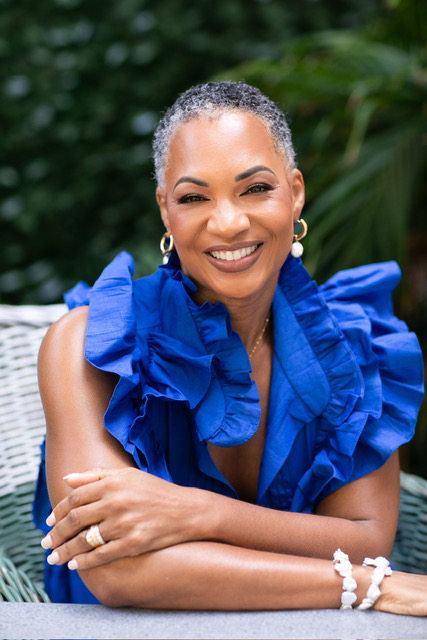
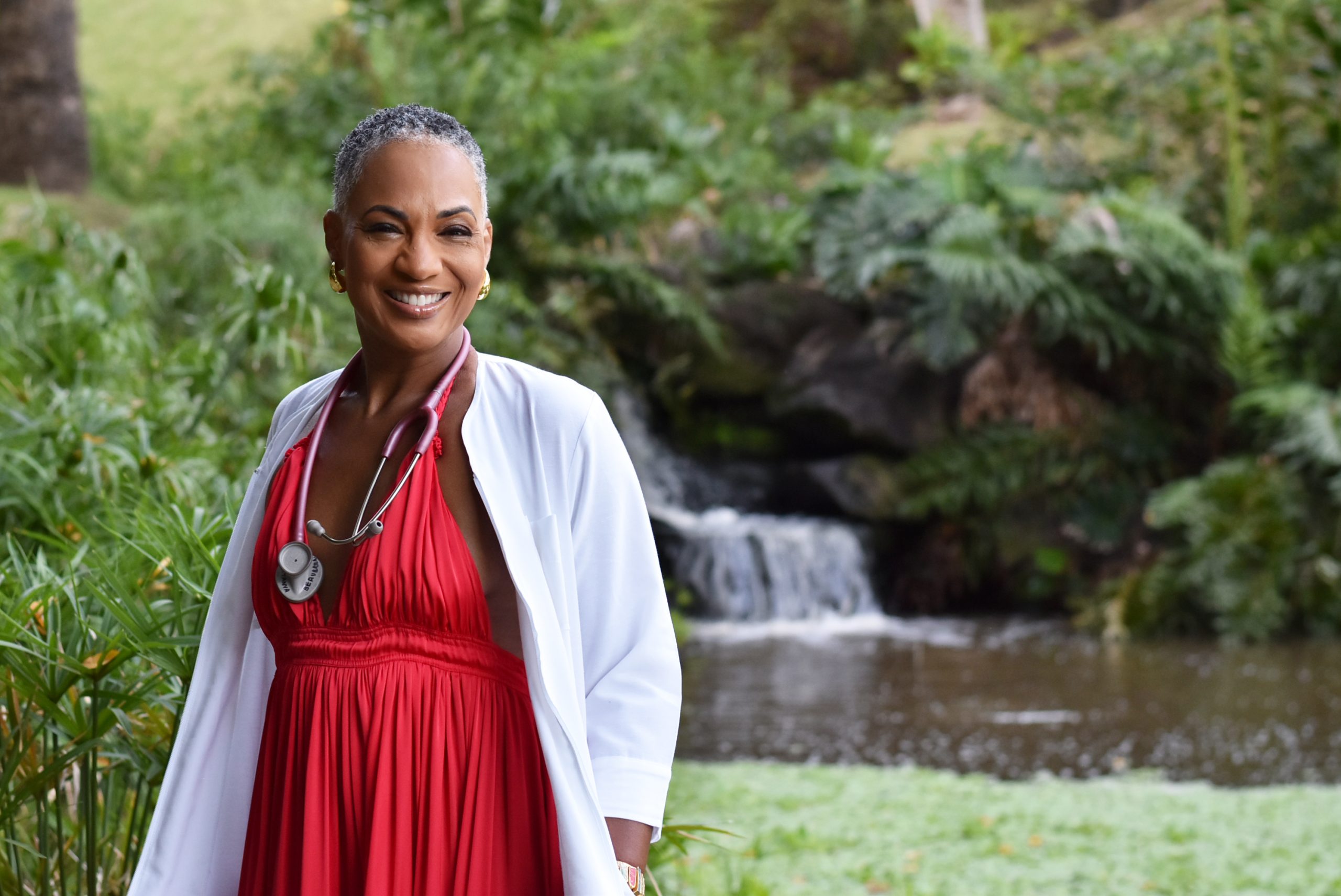
Dr. Tanya Destang-Beaubrun Is Reframing the Conversation Around Caribbean Women’s Health & Healing
How decades of medical practice, personal illness and an unrelenting pursuit of knowledge led Dr. Tanya Destang-Beaubrun to write the book she believes Caribbean women have needed for far too long.
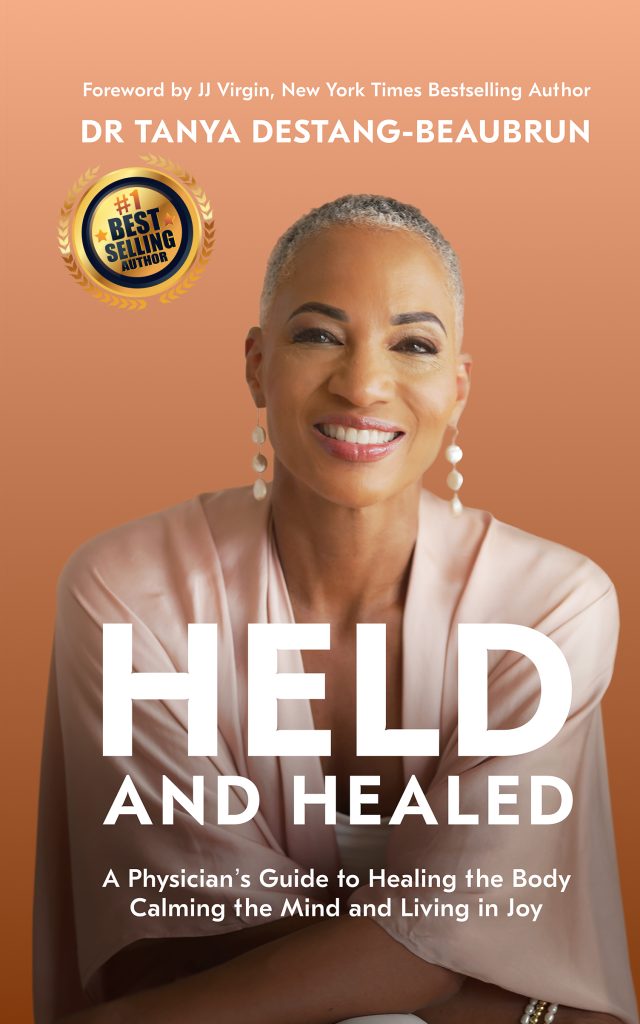
Books rarely emerge from a single moment of inspiration. More often, they are the culmination of questions that refuse to go away, experiences that continue to demand meaning long after they have passed, and of convictions that deepen over time until remaining silent is no longer an option. Held and Healed: A Physician’s Guide to Healing the Body, Calming the Mind and Living in Joy is that kind of book.
For Dr. Tanya Destang-Beaubrun, a well-respected Saint Lucian physician and women’s health expert who is most often affectionately called Dr. Tanya, the journey toward writing Held and Healed began years before she typed a single sentence. It began in examination rooms where she encountered women whose lab results suggested they were healthy while their bodies told an entirely different story. It continued through her own experience of illness, when she unexpectedly found herself lying in a hospital bed pleading silently for someone to see the person behind the diagnosis. It deepened through burnout, recovery and an extraordinary decision to return to university after decades in practice, because she believed there was still more to learn about the women she served.
By the time Held and Healed reached completion, it’s become far more than a guide to hormones, stress or metabolism. It had become the distillation of a physician’s evolving philosophy of care and, perhaps more significantly, a distinctly Caribbean contribution to a global conversation that has too often overlooked the experiences of women from the region.
Part practical guide and part philosophical reimagining of women’s wellbeing, Held and Healed draws on Dr. Tanya’s decades of clinical experience, advanced training in functional and integrative medicine and personal health journey to explore hormones, metabolism, stress, nervous system regulation and the role of joy in healing. Through what she calls the MOre JOy Method, the book argues that sustainable health requires women to care not only for the body, but for the interconnected relationship between body, mind and soul.
“I realized there was nobody in the Caribbean addressing our health,” she says. “So I wrote this book for us as a people, but also for women in general.” Her hope, she explains, is that every reader will feel “seen, held and hugged by somebody who truly gets you.”
That ambition reflects the defining characteristic of Dr. Tanya’s career. She has never been content simply to treat disease. She has spent much of her professional life asking whether medicine itself might become more effective if it looked more carefully at the lives women are actually living.
The Physician Who Chose to Become a Student Again
There is something quietly remarkable about a physician deciding to return to school after already achieving professional success. Many spend their careers teaching others what they know. However, Dr. Tanya became increasingly interested in what she didn’t know.
Her decision to pursue advanced study in functional and integrative medicine came after years of clinical practice and a growing recognition that conventional medicine, while indispensable, couldn’t always answer the questions her patients were asking. Women arrived exhausted, overwhelmed and struggling with symptoms that couldn’t always be explained through routine investigations alone. Rather than dismiss those experiences, she became determined to understand them more fully.
When her daughter left for university in the United States, Dr. Tanya enrolled in a program herself. Almost immediately she panicked.
“I signed up and immediately panicked, like a full-blown meltdown, crying, regretting it,” she recalls. “I”m not cut out for this. I want to go back home.” It was her son who steadied her, joking that when she became “the Caribbean”s Oprah,” the family would simply call her “Boprah.” The humor broke the tension, but the encouragement stayed with her.
What followed was a period of extraordinary intellectual expansion. She completed a fellowship in metabolic, regenerative and anti-aging medicine while simultaneously pursuing a degree in integrative health, immersing herself in disciplines ranging from traditional Chinese medicine and Ayurveda to naturopathy and herbology. Far from questioning her medical education, these studies expanded it, revealing connections between ancient healing traditions and modern scientific understanding that she found both surprising and deeply affirming.
One of her most profound discoveries was also one of the most personal.
“The medicine that my grandmother and great-grandmothers were teaching me,” she says, “was actually stemming from those traditions.” Suddenly, remedies she had known as Caribbean bush medicine acquired scientific context, reinforcing her belief that cultural knowledge and evidence-based medicine need not exist in opposition, but can enrich one another when approached with curiosity and rigor.
That openness to learning would fundamentally reshape her practice. Rather than asking only what disease a woman had developed, she became equally interested in understanding what had brought her to that point in the first place.
That intellectual curiosity would also become one of the defining characteristics of Held and Healed. The book’s scientific foundation is rooted not only in decades of clinical practice, but in Dr. Tanya’s willingness to return to the classroom, challenge her own assumptions and expand her understanding of medicine long after many would have considered their education complete.
When the Doctor Became the Patient
If advanced study broadened Dr. Tanya’s intellectual horizons, becoming a patient transformed her emotionally.
She speaks candidly about the experience of finding herself on the other side of the stethoscope and recognizing how easily medicine can become preoccupied with pathology while overlooking the person living with it.
“I remember lying in the bed and thinking to myself, ‘Please, somebody see me. Don’t look at the disease. Please see me.'”
The moment altered her permanently.
Looking back, she realized she had often approached patients in exactly the way she herself was now experiencing, not because she lacked compassion, but because that was how she had been trained. Disease came first, and the person came second. She resolved that it would never happen again.
“I vowed never to look at a patient that way again,” she says, and instead went “in search of a better way of treating or healing people, as opposed to curing disease.”
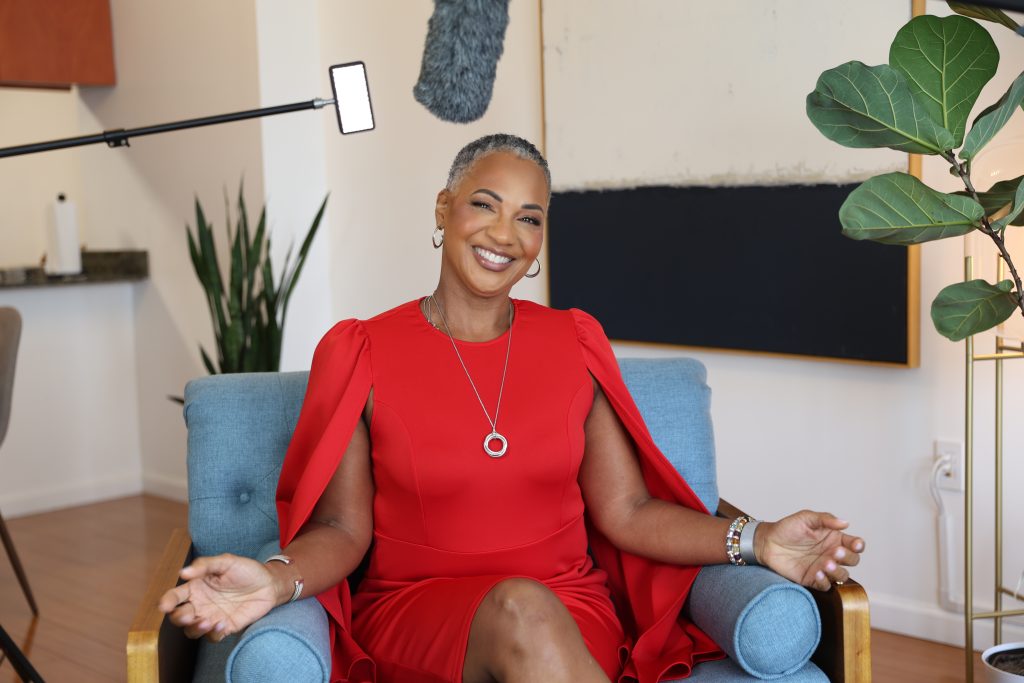
That search would eventually lead her into functional medicine, where she encountered an approach centered not simply on diagnosis, but on understanding the biological, emotional and environmental conditions that shape health over time. The question shifted from What disease does this woman have? to What has brought this woman here?
For Dr. Tanya, the distinction changed everything.
It also became one of the emotional anchors of Held and Healed. Beneath the book’s discussions of hormones, metabolism and functional medicine lies a more fundamental conviction born from her own experience: that women cannot be understood solely through diagnosis and that healing begins when they feel genuinely seen, heard and understood.
From Joy to Healing
Then, there’s burnout… Long before it became part of everyday conversation, Dr. Tanya experienced it herself.
Despite being a physician, she failed to recognize what was happening. Her conventional tests appeared normal, yet she felt profoundly unwell. Eventually she found a functional medicine doctor in the United States who diagnosed her with severe adrenal dysfunction. She recalls that when she first walked into that doctor’s office, she burst into tears.
And, surprisingly, the physician actually held her.
“I felt seen. I felt understood. I felt held in a safe space,” Dr. Tanya recalls. The experience became one of the defining moments of her professional life, because it demonstrated the healing power of compassion alongside clinical expertise.
The lessons of that encounter permeate Held and Healed. The title itself reflects her conviction that women heal best when they feel safe, understood and supported.
“I want people to feel held in a safe container while they heal,” she explains. “Because I’m not healing you. You’re actually healing yourself.”
It’s a philosophy that also shaped the MOre JOy Method, the framework at the heart of the book, integrating physical health, emotional wellbeing and spiritual connection into a model that recognizes the inseparability of body, mind and soul.
Readers familiar with Dr. Tanya’s first book, Bubbles, Buddha and Butterflies, will recognize this emphasis on joy as a recurring theme in her work. Published years earlier, the Amazon bestseller explores intentional living, personal transformation and the importance of reconnecting with oneself after periods of depletion and burnout.
Held and Healed builds on those ideas, but expands them through the lens of medicine, drawing on years of additional study and clinical experience to explain the physiological consequences of chronic stress and why healing requires attention not only to the mind and spirit, but to the body itself. Read together, the two books reveal the evolution of a physician whose understanding of wellbeing has grown from personal reflection into a comprehensive philosophy of care.
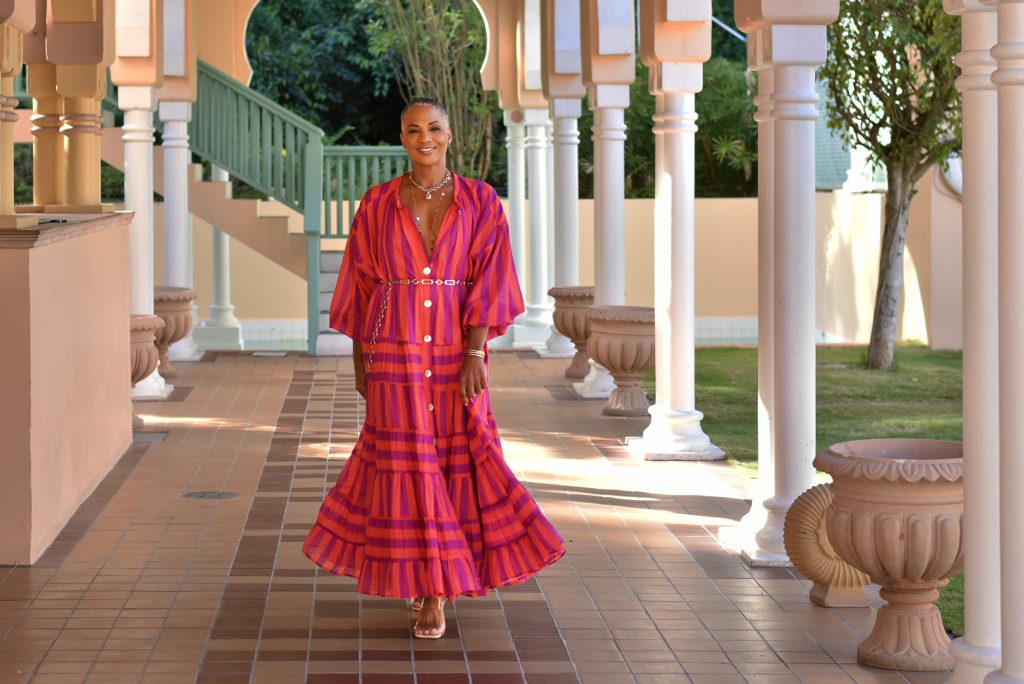
Why Caribbean Women Need This Book
Although Held and Healed speaks to women everywhere, its perspective is unmistakably Caribbean.
Dr. Tanya believes that many Caribbean women have inherited a culture that prizes resilience while offering remarkably little language for discussing exhaustion, hormonal change or emotional depletion. Mothers and grandmothers persevered through menopause without explanation. Professional women learned to conceal vulnerability, because they feared being perceived as weak. Caregiving became so deeply ingrained that self-care often appeared indulgent.
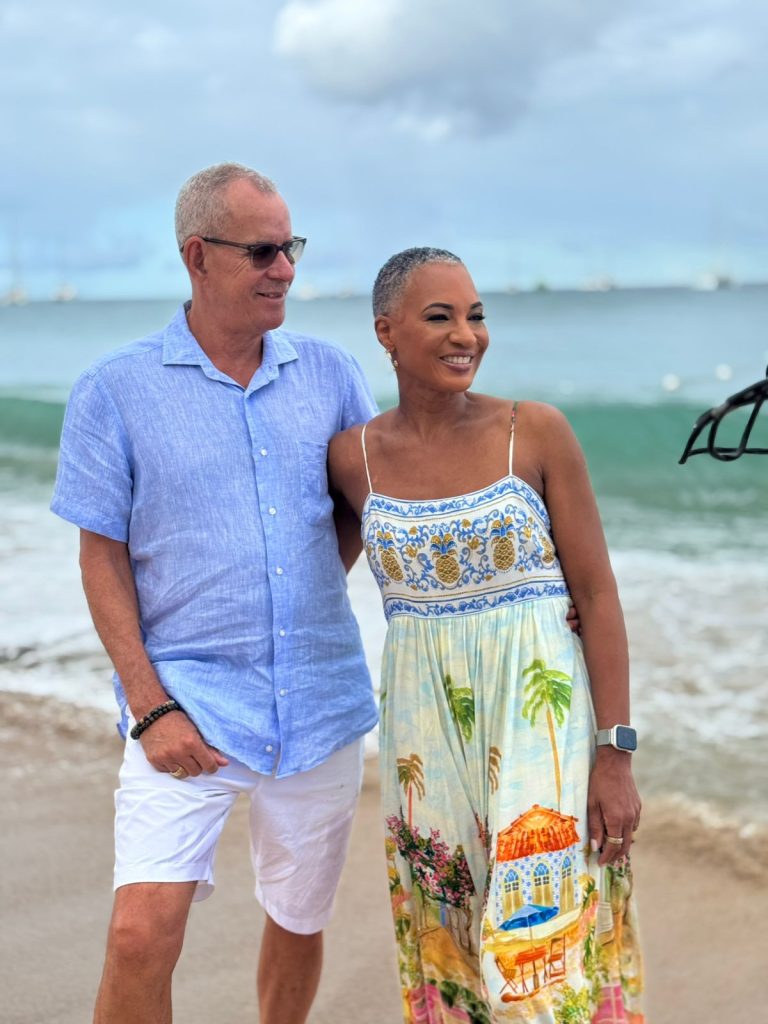
“We’re trained not to show weakness,” she observes. “We have to be strong.”
That reality convinced her that Caribbean women deserved a book written with their lived experiences in mind, because culture shapes the way health is experienced, discussed and understood. She wanted readers to encounter information that was rigorous, without being intimidating, and compassionate without being simplistic.
“My book wants to feel like a hug,” she says. “Women are tired. They don’t need a heavy book. They need somebody who will understand what they’re going through and let them know they’re not broken and that there is hope and healing.”
Carrying the Caribbean Into Every Room
Dr. Tanya’s commitment to representation extends beyond the pages of her book.
When she appeared on Oprah, she ensured that a photograph of the Pitons stood behind her and wore a Saint Lucian flag pin on her lapel. She later learned that when she was introduced as “Dr. Tanya from Saint Lucia,” the online chat erupted with messages from Caribbean viewers celebrating the moment.
“I was aware that I was representing not just Saint Lucia but the Caribbean,” she says. “Wherever we go, we do not lose that unique Caribbeanness that we have.”
The gesture was symbolic of a broader philosophy that has guided her career. Whether bringing tamarind and Saint Lucian chocolate to international conferences or challenging the absence of Caribbean voices in discussions on women’s health, she has insisted that expertise from the region deserves a place within global conversations.
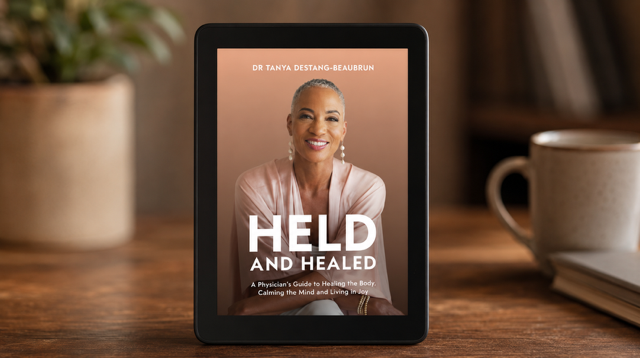
In many respects, Held and Healed embodies that same conviction.
It’s a book grounded in science, but shaped by Caribbean experience; informed by global research, yet deeply attentive to the cultural realities of women who have too often been expected to endure in silence.
For Dr. Tanya Destang-Beaubrun, that silence is no longer acceptable.
The book she has written is, ultimately, an invitation to replace endurance with understanding, shame with knowledge and isolation with the reassuring possibility that healing begins when women recognize they are not broken at all. They are simply bodies and lives that have been adapting for far too long.
And perhaps that is why Held and Healed feels less like the beginning of a new chapter than the culmination of everything that came before it: a physician’s lifelong pursuit of better questions, a Caribbean woman’s determination to ensure her community is seen, and a deeply personal belief that the future of women’s health will be shaped not only by better treatments, but by a more compassionate understanding of the women those treatments are meant to serve.
Order Held and Healed: A Physician’s Guide to Healing the Body, Calming the Mind and Living in Joy on Amazon and learn more about Dr. Tanya Destang-Beaubrun at tanyabeaubrun.com.