
Donnya Piggott and the Work of Making Inclusion Structural
Donnya Piggott is most notable not for visibility, but for permanence. Her work has never been about trends or moments, but about what remains after them. Across advocacy, entrepreneurship, and policy, she has spent more than a decade ensuring that LGBTQ inclusion in the Caribbean is not symbolic or conditional, but embedded into the systems that shape how people live, work, and move through the world. That ability to translate justice into structure is precisely what defines her leadership.
That work is being recognized through the Women Impact Awards, which honor women whose leadership strengthens communities while advancing long-term, sustainable development. The awards will be presented during Future Forward: A Caribbean Philanthropy Forum, taking place February 9–12, 2026, in Kingston, Jamaica. Hosted by the Caribbean Philanthropic Alliance, the forum convenes global and regional leaders across philanthropy, policy, business, and civil society to explore how collaboration and innovation can shape more resilient Caribbean futures. Within this setting, the Women Impact Awards spotlight impact that is not episodic, but structural — work that continues to matter long after a single initiative or moment has passed.
Inclusive Growth, Built and Rebuilt
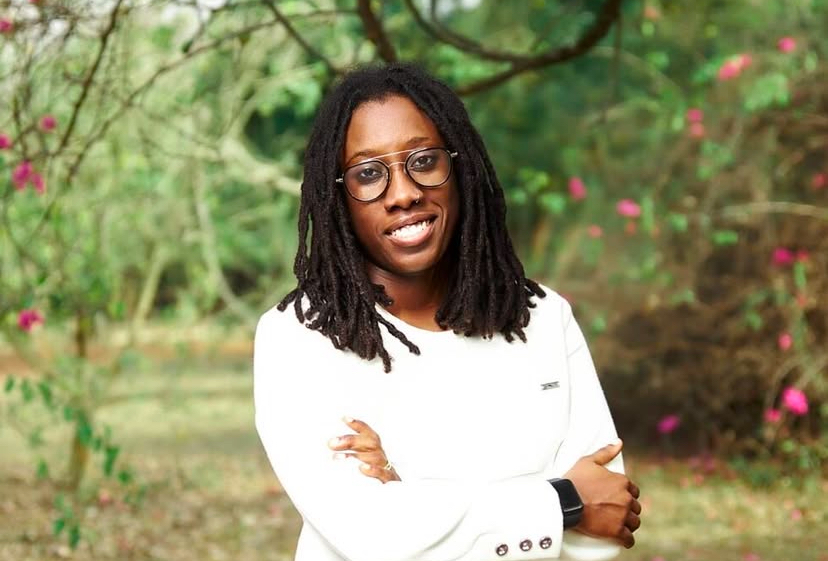
Piggott is the founder of Pink Coconuts, an LGBTQ-inclusive edtech and tourism platform she launched to reimagine how hospitality businesses engage with both employees and travelers. From its inception, Pink Coconuts sat at the intersection of human rights and economic development, asking a clear question: what would Caribbean tourism look like if dignity were treated as an asset rather than an afterthought?
The question was not theoretical. Tourism accounts for more than 30% of GDP in several Caribbean economies, making hospitality one of the region’s most influential and visible industries. At the same time, LGBTQ travelers are estimated to represent a $200+ billion global travel market, underscoring the economic relevance of inclusive service models. Pink Coconuts positioned inclusion not as charity, but as strategy.
Over nearly eight years, the platform built a tangible footprint: a network of LGBTQ-friendly vendors across multiple Caribbean countries; inclusive hospitality training delivered through accessible digital tools; and regional Inclusion Symposiums that convened governments, airlines, hotels, and civil society partners to move the conversation from intent to implementation.
In late 2025, Piggott made the deliberate decision to sunset Pink Coconuts, publicly reflecting on the realities of sustaining a social-impact startup within complex legal, political, and funding environments. Rather than framing the closure as failure, she framed it as learning — acknowledging that the venture’s mission may have been better served within a nonprofit structure. What remains is not an absence, but a legacy: trained workers, informed institutions, and a regional tourism industry more equipped to engage inclusion as both ethical responsibility and economic opportunity.
Advocacy as Infrastructure
Long before Pink Coconuts, Piggott was already shaping the region’s advocacy landscape — work rooted not only in principle, but in lived experience. In her early twenties, after coming out as a lesbian, she experienced homelessness, a period that revealed how quickly support systems can collapse for LGBTQ people. That moment became a catalyst, sharpening her understanding of what safety, stability, and belonging truly require.
In 2012, she founded B-GLAD (Barbados – Gays, Lesbians and All-Sexuals Against Discrimination), Barbados’ first LGBTQ organization. At a time when LGBTQ people faced both legal vulnerability and deep social stigma, B-GLAD provided a formal structure for community support, public education, and policy engagement. Under Piggott’s leadership, advocacy efforts helped advance workplace anti-discrimination protections based on sexual orientation, improving economic security and safety for LGBTQ employees, which is a concrete shift with lasting implications.
Her thinking consistently extended beyond visibility to viability. As a co-author of Prioritizing Inclusive Development, Piggott helped frame LGBTQ inclusion as a necessary component of sustainable growth, aligning human rights with development outcomes. This perspective reflects a growing body of global research showing that exclusionary systems undermine workforce participation, productivity, and economic resilience, particularly in tourism-dependent economies.
Recognition Rooted in Systems Change
Piggott’s leadership has earned international recognition. In 2015, she was named a Queen’s Young Leaders Award recipient, honoring her early impact across Barbados and the wider Caribbean. She later won the SDG 10 Challenge at One Young World, recognizing innovations that actively reduce inequality. These honors mark milestones, but they do not define her work.
What distinguishes Donnya Piggott is not only what she has built, but how she has been willing to interrogate, adapt, and evolve what building really means. Her career demonstrates that advocacy and enterprise are not opposites, and that sometimes the most responsible leadership decision is knowing when a model has reached its limits, and when its lessons must travel forward without it.
As a Women Impact Awards honoree, Piggott’s recognition is not a conclusion, but a reflection of sustained influence. Her work continues to shape how the Caribbean imagines inclusion, leadership, and growth — reminding us that real impact is measured not by longevity alone, but by the systems that continue to hold long after a chapter closes.