Michèle D. Pierre-Louis and the Work of Building Democracy in Haiti
From Haiti’s highest levels of government to education, civil society, culture and philanthropy, Michèle Duvivier Pierre-Louis has spent decades building the institutions and civic spaces through which Haitians can shape their own future.
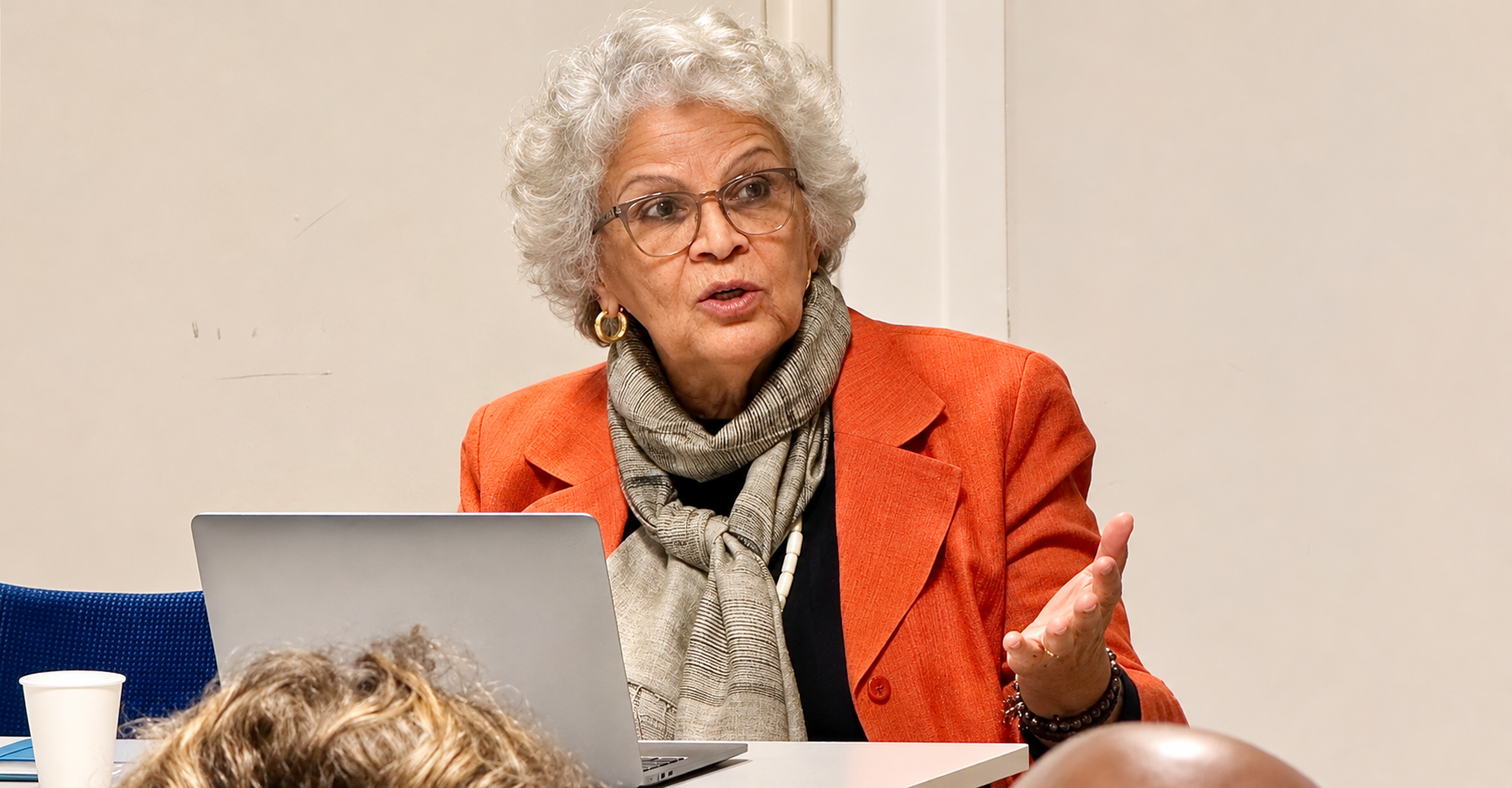
In 2008, Michèle Duvivier Pierre-Louis became only the second woman in Haiti’s history to serve as prime minister. She entered government at a particularly difficult moment, amid political and economic instability and the devastation left by four hurricanes. She also served as minister of justice and public security before leaving office in November 2009.
But the significance of Pierre-Louis’s public life extends far beyond the thirteen months she spent as prime minister.
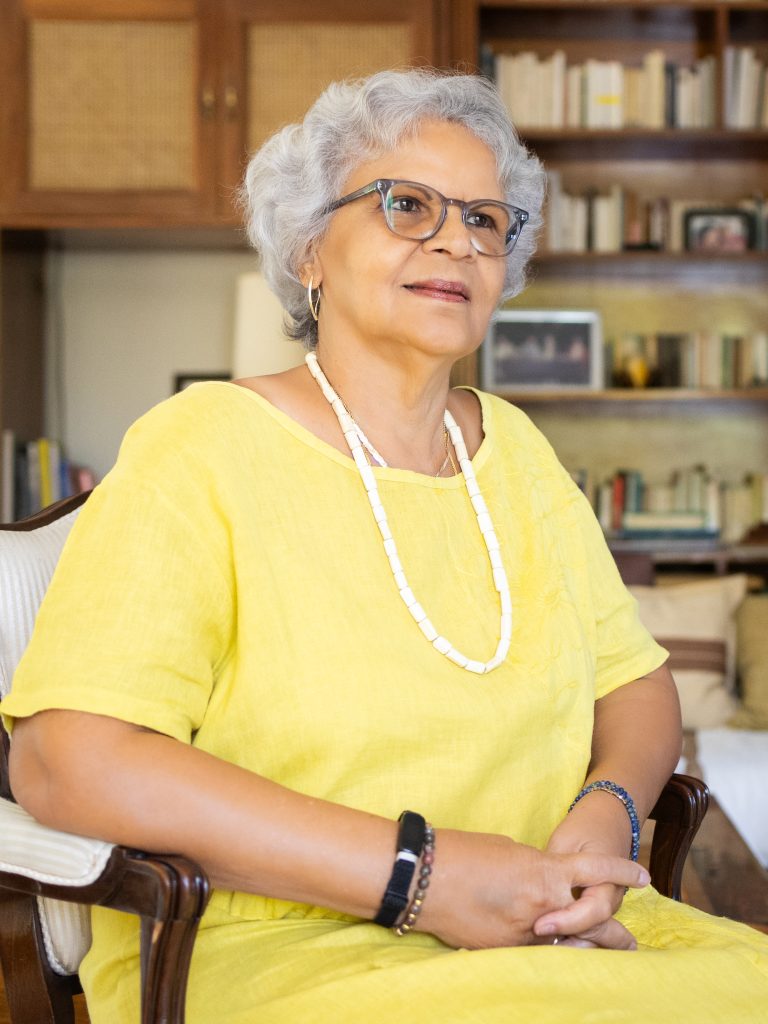
An educator, institution-builder, writer and advocate, she has spent decades working across government, civil society, culture and development. In 1995, she founded the Fondation Connaissance et Liberté, known as FOKAL, and today serves as its president, overseeing work in sustainable development, higher education and national heritage, with an emphasis on human rights and gender justice. She is also a professor at Université Quisqueya, chair of Le Centre d’art, and chair of the Caribbean Culture Fund.
Her career has taken her well beyond Haiti as well. She has served on international commissions and United Nations advisory bodies focused on issues including the death penalty, development and mediation. Yet across those different roles, a consistent concern emerges: how can Haiti build institutions that genuinely serve its people, and what does it take to create a democracy that extends beyond the formal structures of political power?
For Pierre-Louis, the answer begins with understanding democracy as a process.
A different understanding of democracy
“Democracy is not a destination, it is a way to travel!” ~ Jacques Rancière
That phrase, which Pierre-Louis heard at a conference on countries in democratic transition, captures much of her thinking about Haiti. Democracy, in her view, cannot be reduced to elections or the transfer of political office. Elections are necessary, but they are only part of what she describes as the “electoral kit.” What matters equally is whether citizens are informed, represented and able to participate meaningfully in decisions affecting their lives.
“Democracy requires enlightened leaders and educated informed people,” she says.
Education has therefore been a thread running through much of Pierre-Louis’s career. Before becoming prime minister, she worked in literacy and adult education and became involved in Haiti’s Mission Alpha literacy campaign. She later brought that commitment to FOKAL, developing an institution whose work has encompassed education, development, arts and culture, and support for civil society.
Her understanding of education is broader than access to schooling. It is about developing citizens capable of thinking critically, understanding their rights and participating in public life. It is also about creating institutions that recognize the equal value of citizens, whether they are political leaders, professionals, teachers or smallholder farmers.
This framework is central to her understanding of democratic development. She believes a functioning democracy requires more than the institutions of government; it requires the civic, educational and social infrastructure that allows people to engage with those institutions.
Building from within
Pierre-Louis’s years outside government have given her a particular perspective on the relationship between Haiti and the international community.
She does not reject international assistance. Rather, she argues that development efforts must begin with a serious understanding of Haiti’s own history, institutions, social structures and communities. Too often, she believes, solutions are designed elsewhere and brought into Haiti without sufficient attention to whether they fit the realities of the country.
Her message to international partners is direct: “Listen to us. Trust those that can be accountable.”
That principle is reflected in the work of FOKAL, which has invested in Haitian organizations and initiatives rather than treating communities simply as beneficiaries of outside intervention. Civil society organizations, in Pierre-Louis’s view, have an essential democratic role because they remain connected to communities, create spaces for participation and can hold institutions accountable.
Her experience has also made her critical of approaches to institutional reform that fail to take Haiti’s circumstances into account. The justice system, education, economic opportunity and the rule of law cannot be strengthened through formulas alone. They require institutions capable of responding to the particular realities of the people they serve.
This is where Pierre-Louis’s conception of democracy becomes less about political theory and more about the practical architecture of everyday life. She believes a democracy has to work in schools, courts, communities and public institutions. It has to create conditions in which citizens can participate with knowledge and agency.
And it has to be built by people who understand the society in which it is expected to function.

History and the power to tell Haiti’s story
That emphasis on local knowledge is closely connected to Pierre-Louis’s understanding of history.
She believes Haiti’s present cannot be separated from its past—from the Haitian Revolution and independence, to the country’s relationship with the international community and the development of its own political, economic and social institutions.
History, in her view, is not simply something to preserve in archives. It helps explain how a society arrived where it is and gives citizens the knowledge necessary to question the assumptions surrounding them.
That is one reason education and culture have remained so important to her work.
Pierre-Louis has written extensively on politics, gender, economics, arts and culture and has contributed to books and journals. She has also used her institutional platforms to support the preservation and interpretation of Haitian heritage.
For her, critical thinking is part of democratic citizenship. People need opportunities to encounter new ideas, challenge prevailing narratives and develop their own understanding of their society.
That work becomes particularly important in Haiti, where international narratives about the country have so often been dominated by political crisis, poverty and instability.
Pierre-Louis’s career offers another way of looking at Haiti: through the people creating institutions, preserving culture, educating communities and developing solutions from within.
Where culture becomes part of democracy
Her commitment to culture is not separate from this vision.
As chair of Le Centre d’art, Pierre-Louis remains closely connected to Haiti’s artists and cultural institutions. She sees artists as participants in the country’s broader civic life, as people who document its contradictions, preserve its memory and challenge the ways Haiti is represented.
Haitian artists, she has argued, are constantly engaging with questions of identity, history, dignity and social reality. Their work can challenge stereotypes and offer alternative ways of understanding the country.
That belief also shapes her work with the Caribbean Culture Fund, where she has helped advance the idea that cultural investment belongs within broader conversations about development. Artists are already engaging with issues such as climate change, community development and social cohesion, she has argued; philanthropy and development institutions therefore have to recognize the contribution that creative work can make.
“Philanthropy is power,” she has said, calling for art to exist “at the intersection of every other sector.”
The idea reflects a larger philosophy that runs throughout her career. Culture is not an accessory to development, she says. It is one of the ways communities understand themselves, preserve memory and imagine possibilities beyond their present circumstances.
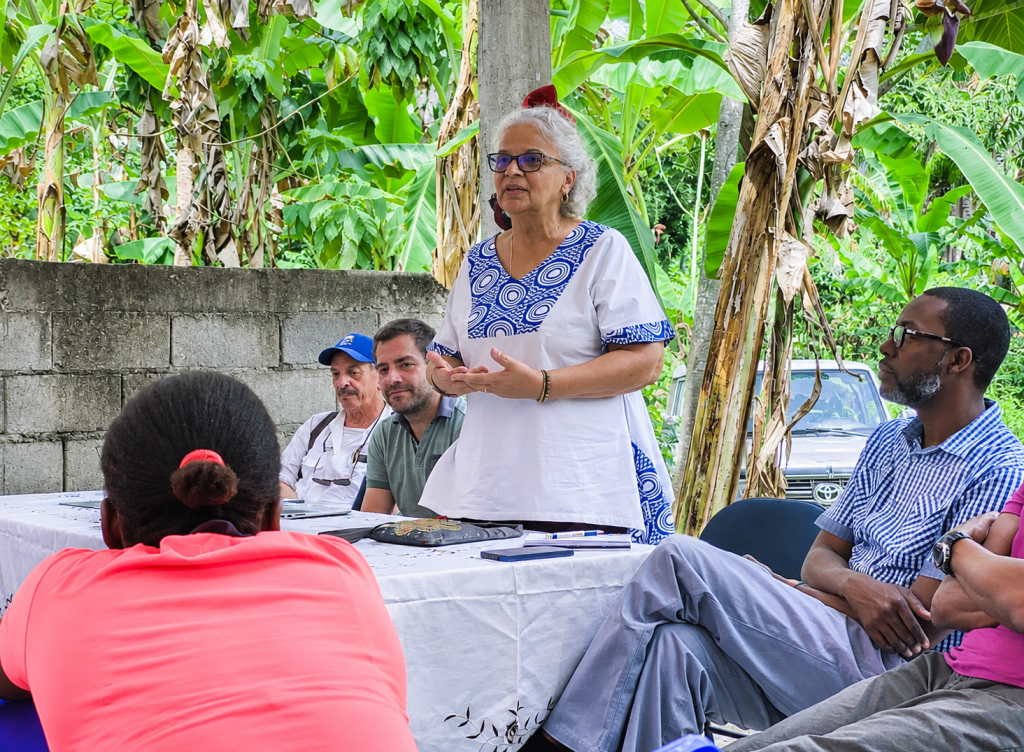
A lifetime of building
Pierre-Louis’s place in Haitian history is significant because she became only the second woman to serve as prime minister. But her larger contribution has been built over decades and across institutions.
She has worked in education and government, founded and led a major Haitian foundation, supported civil society, championed culture and heritage, advocated for gender justice and participated in international conversations around democracy and human rights. Her distinctions include three honorary doctorates, France’s Légion d’honneur and the Women Political Leaders Trailblazer Award. In 2025, she received an Impact Award from the Caribbean Philanthropic Alliance for her leadership and lifelong contribution to democracy, culture and development in Haiti.
Yet the titles and awards tell only part of the story.
What connects Pierre-Louis’s work is her belief that lasting change requires people to have the knowledge, institutions and civic spaces necessary to participate in shaping their own societies. It is why she has moved so naturally between education, politics, culture and philanthropy. Each has offered another way of strengthening the same democratic foundation.
It is also why she describes democracy as a “lifetime project.”
For Pierre-Louis, the work is not simply to change who occupies political office. It is to build the conditions in which citizens can participate, institutions can earn trust and communities can develop the confidence to determine their own futures.
That work takes place in the classroom and the cultural institution, in civil society organizations and government, through philanthropy and through the preservation of history. It is the quieter, longer work that happens beyond the political moment.
And after decades spent moving between those worlds, Pierre-Louis continues to make the case that Haiti’s future cannot be built by politics alone. It must be built through people, institutions, knowledge and culture, and through the sustained participation of Haitians themselves.