
Laura Jackson on Legacy, Healing and Choosing Joy Across Generations
The founder of Paradigm Joy reflects on the women who shaped her life, the power of compassion, and why healing begins with believing we are worthy of care.
Long before Laura Jackson became a mental health professional, wellness educator, and founder of Paradigm Joy, she was shaped by a lineage of women whose lives embodied courage, sacrifice, resilience, and care.
One of those women was her great-great-grandmother, Ann Maria Jackson, who escaped slavery in Delaware in 1858 with her seven children and journeyed to freedom through the Underground Railroad. Another was her grandmother, who worked tirelessly so her daughter could pursue an education. Then came her Jamaican mother, a nurse and healthcare leader whose life was dedicated to serving others.
Today, Jackson sees her own work as part of that continuum.
Drawing on more than two decades of experience in healthcare, mental health, wellness, education, and leadership, she helps individuals and organizations navigate stress, trauma, burnout, and personal transformation through coaching, mindfulness, yoga, retreats, and self-compassion practices. Yet beneath the credentials and professional accomplishments lies a simple belief: every person deserves healing, dignity, and joy.
In this conversation, Jackson reflects on legacy, compassion, conscious leadership, creativity, self-care, and the women whose strength continues to guide her journey.
You mentioned wanting to highlight “the women before you,” particularly your great-great-grandmother. Can you tell us her story and how her legacy continues to shape who you are today?
Ann Maria Jackson, my great-great-grandmother, was an enslaved woman living in Milford, Delaware, during the 1800s. She was the wife of John Jackson and the mother of nine children.
In 1858, two of her children were sold. The trauma of losing them caused my great-great-grandfather to lose his sanity, and he eventually died in an almshouse. Later that same year, Ann Maria learned that four more of her children were about to be sold.
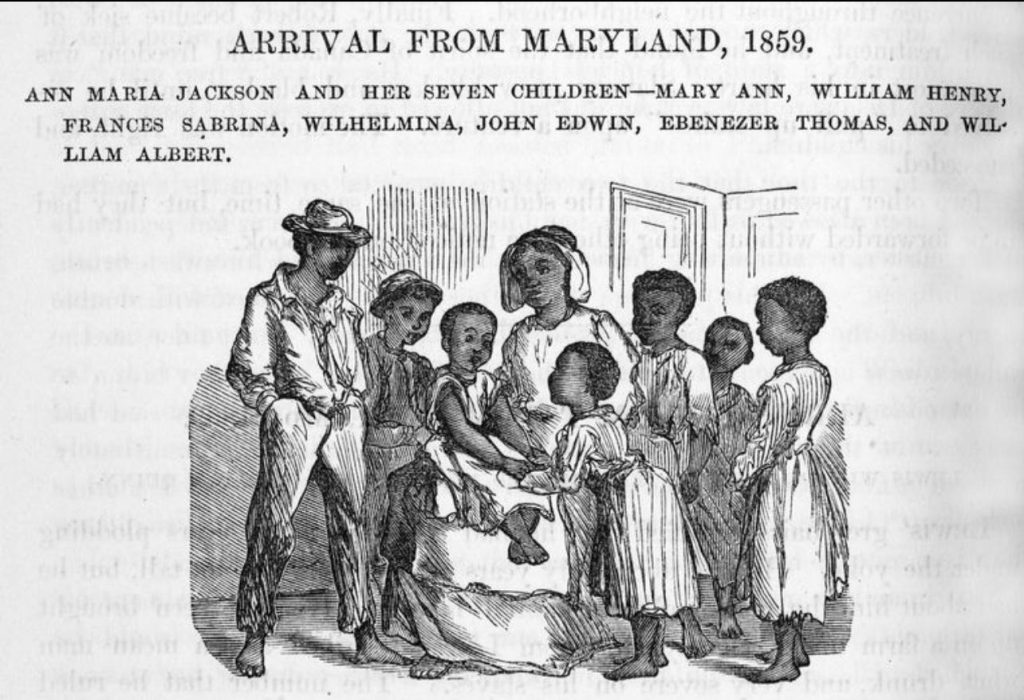
Faced with the unimaginable possibility of losing more of her family, she made the courageous decision to escape. In November 1858, she fled with her seven remaining children, whose ages ranged from two to sixteen years old.
The Fugitive Slave Act was still in effect at the time, making the journey extraordinarily dangerous. With the support of abolitionists and the Underground Railroad, Ann Maria and her children traveled from Delaware to Philadelphia, then to St. Catharines, Ontario, before eventually settling in Toronto.
I often think about the courage that decision required. Her determination to pursue freedom for herself and her children continues to inspire me. I am deeply grateful for her resilience and for the people who helped my family move toward liberation.
Your work centers healing, compassion, and self-compassion. Why do these themes matter so deeply to you personally?
I believe access to quality healthcare and the opportunity to heal from illness, injury, disease, or trauma are fundamental human rights.
The values of care and compassion were modeled for me from an early age by my mother and grandmother. My mother was a registered nurse and healthcare executive who demonstrated compassion not only through her profession, but through the way she treated family, friends, strangers, and the communities she served. She left Jamaica as a young woman to study nursing and midwifery in England before immigrating to Canada and building a life dedicated to helping others.
Her journey was made possible by my grandmother, a woman of Jamaican Chinese heritage who worked hard and saved diligently so that her daughter could pursue her education.
I eventually followed in my mother’s footsteps, becoming a registered nurse myself and later specializing in psychiatric and mental health nursing.
Throughout my life and career, I have seen firsthand how suffering affects individuals, families, and communities. Compassionate action has always felt morally right to me. The desire to reduce suffering and support healing is, I believe, one of the most powerful expressions of our shared humanity.
Self-compassion has been equally important. It has taught me how to establish healthier boundaries, navigate challenges with greater kindness, and sustain my ability to care for others without losing myself in the process.
Paradigm Joy brings together coaching, education, retreats, mindfulness, yoga, and wellness programming. Can you tell us more about the work you do through Paradigm Joy and the types of individuals and communities you most often support?

My approach is integrative. I provide coaching and psychotherapy, drawing on a range of modalities tailored to each client’s needs. I support people facing concerns such as mental health challenges, stress, the effects of racism and other oppressive systems, life transitions and health or lifestyle changes.
Through partnerships, I also support organizations with employee mental health, wellness, performance, workplace-related challenges and education. This work often includes individual and group interventions, helping leaders better support their teams, and supporting employees through workplace conflict, transitions, stress, and burnout.
I most often work with caregivers, healthcare workers, busy professionals, leaders, and BIPOC clients.
You mentioned your work with healthcare workers and caregivers experiencing burnout, empathic strain, secondary traumatic stress, and moral distress. What have you learned from supporting people whose work centers caring for others, and what advice would you offer to those who may be struggling themselves?
This work has reinforced for me that care, compassion, and love are abundant—but they must also be extended to yourself.
Burnout is more common than people think. It is seldom just about an individual and often reflects other issues at play that are out of an individuals’ control, such as systemic racism, injustice and workplace culture.
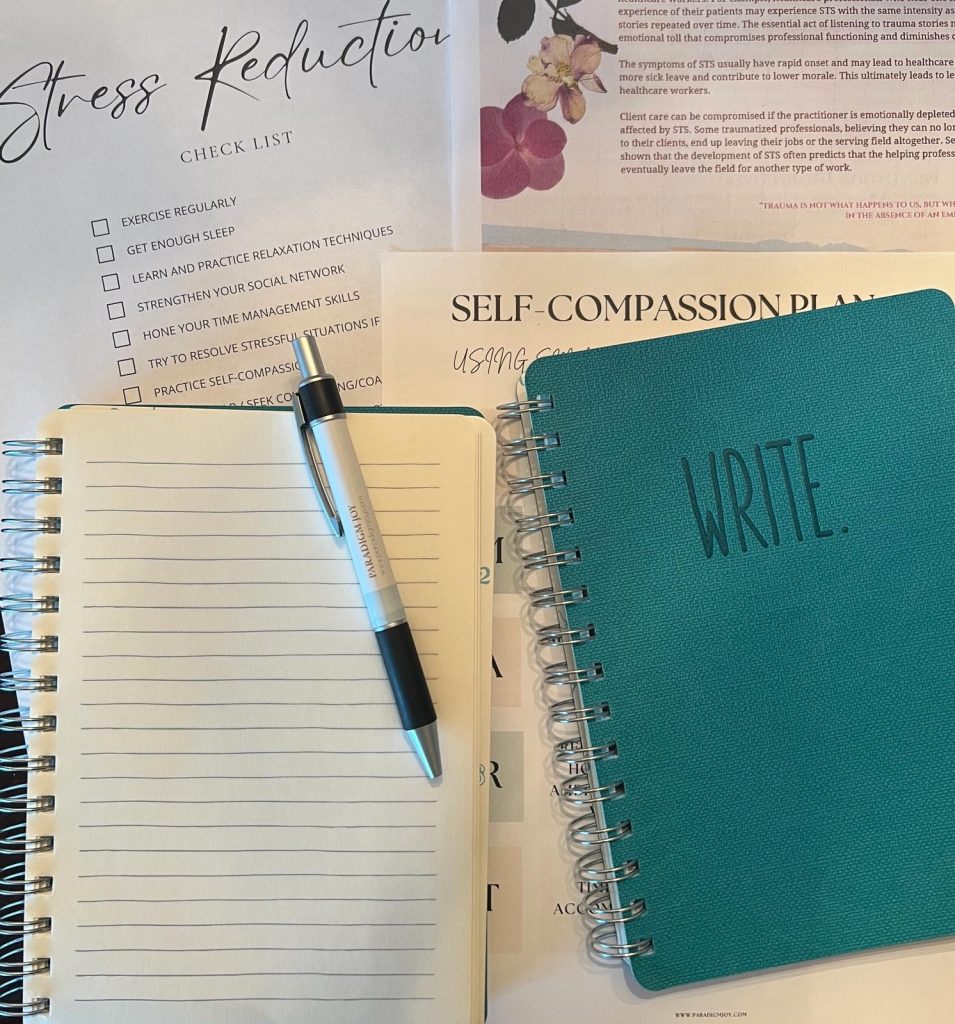
For anyone who may be struggling, expressions of self-compassion are personal—it must feel genuine and meaningful to you to be effective. Although it is often associated with gentleness and care, it can also be bold and powerful. Standing up for yourself, setting boundaries, and saying no are all acts of self-compassion.
As a Black woman working in mental health and wellness, how has your own heritage influenced your approach to healing?
My heritage has profoundly influenced both who I am and the work I do.
As a Black woman with firsthand experience of intergenerational trauma, racism, and discrimination, I understand how these experiences can affect mental health, wellbeing, identity, and self-worth. While I work with diverse communities, I have intentionally developed services that support Black communities and communities of color because I recognize the unique challenges many people face.

Healing often begins when people feel seen, understood, and safe. It is a privilege to support individuals who may be navigating the emotional impact of racism, trauma, loss, or adversity and to help them reconnect with their strengths, resilience, and capacity for healing.
You often speak about conscious leadership rooted in skill, curiosity, and collaboration. What does that look like in practice?
For me, conscious leadership begins with self-awareness.
Leaders shape culture through the way they communicate, make decisions, respond to challenges, and engage with others. Whether we are leading organizations, families, teams, or communities, our actions influence the people around us.
Conscious leadership requires curiosity, humility, and a willingness to learn. It means listening deeply, remaining open to perspectives that differ from our own, and creating environments where people feel respected, valued, and psychologically safe.
Throughout my career leading diverse healthcare teams, I have seen how trust, empathy, consistency, and collaboration strengthen both individuals and organizations. When people feel safe and supported, they are more likely to thrive.
Creativity and joy are recurring themes in your work. How do they show up in your own life?

Creativity and joy are essential to my wellbeing.
Photography has been one of my most meaningful creative practices. It encourages me to slow down, pay attention, and fully experience the present moment. Through the lens of a camera, I often find myself noticing beauty, detail, and perspective that I might otherwise overlook.
Creativity also plays an important role in the work I do. Human experiences are complex, and healing is rarely a linear process. Creative approaches often help people access insight, meaning, and transformation in ways that traditional methods alone cannot.
Joy, meanwhile, is something I actively cultivate.
For me, choosing joy does not mean ignoring life’s difficulties. Rather, it means remaining open to gratitude, beauty, connection, wonder, and hope, even during challenging seasons. Mindfulness has taught me that joy is often found in ordinary moments when we are fully present enough to notice them.
Supporting others through stress, trauma, and healing is deeply meaningful work. How do you personally care for yourself while caring for others?
Self-care is not optional in this work. It is essential.
I intentionally create space throughout my day to rest, reset, and reconnect with myself. Movement practices, meditation, and time in nature are particularly important for me because they help me release stress and maintain balance.

Nature has always been one of my greatest teachers and sources of healing. Spending time outdoors helps me feel grounded, restored, and connected to something larger than myself.
I also make a conscious effort to step away from technology and social media when needed. Creating space for stillness allows me to reflect, recharge, and return to my work with greater presence and energy.
Travel has also been an important source of inspiration and renewal throughout my life. Exploring new places often provides perspective and reminds me of both the diversity and interconnectedness of our shared human experience.
When you think about the legacy you hope to leave through Paradigm Joy, what do you hope people remember?
I hope people remember that they are worthy of care, compassion, healing, and joy.
So many people move through life believing they must earn rest, happiness, belonging, or self-acceptance. I want people to understand that their worth is not contingent upon achievement or productivity.
If my work helps people reconnect with their authentic selves, trust their own value, and create lives that feel meaningful and fulfilling, then I will feel that I have contributed something worthwhile.
The healing power of joy belongs to all of us.

Finally, what message would you like to share with other women who are pursuing their dreams?
I am inspired by your strength and courage.
I am cheering you on.
What if it turns out better than you can imagine?